

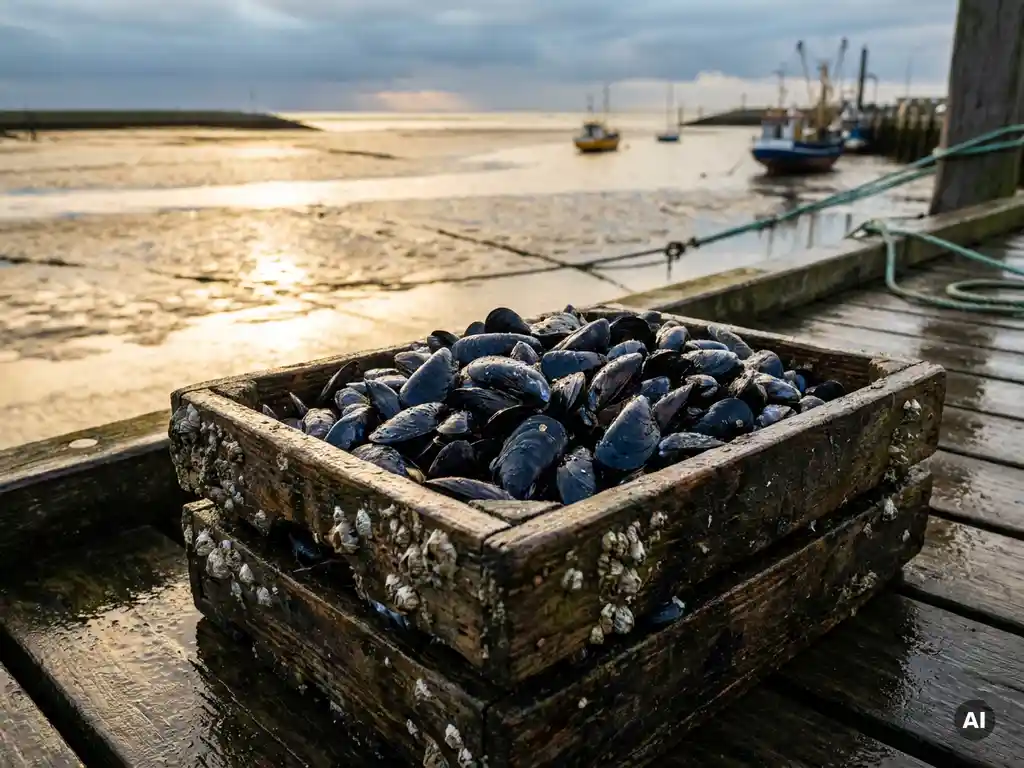
The mussel season in the Netherlands lasts roughly from June through February or March. During this period, fresh mussels are available, with the peak months from August through November when the mussels are at their best. Outside of this season, fresh mussels are hardly available, but alternatives exist for hospitality businesses that wish to serve mussels year-round. Below you will find answers to the most frequently asked questions about the mussel season.
When does the mussel season begin and end in the Netherlands?
The mussel season in the Netherlands traditionally begins in June and runs until approximately February or March of the following year. The exact start varies each year and depends on the quality of the mussels after the summer period. In late June or early July, the industry decides whether the mussels are ripe enough to harvest.
The opening of the season is a serious matter in the mussel industry. Before the first mussels are delivered, samples are taken and assessed for meat and fat content. Only when the mussels are sufficiently filled does the sector give the green light. This quality check therefore helps determine when the season officially starts.
Towards the end of the season, in February or March, the quality gradually declines. Mussels begin to spawn at that time: they devote their energy to reproduction and consequently lose meat and flavor. At that point, the supply of fresh mussels from the waters of Zeeland and North Holland ceases.
Why aren't mussels available all year round?
Mussels are not available all year round because their biological cycle determines when they are edible. During the spawning season, which falls in spring and early summer, mussels lose their flesh and become watery and lean. Although they are alive, they are hardly worth the effort from a culinary perspective.
This is not a matter of regulations or logistics, but of nature. Mussels are filter feeders: they live on algae and plankton in the water. During the summer months, the food supply increases significantly, causing mussels to quickly gain weight and quality. After spawning, which takes place in early spring, they need the rest of the year to rebuild their reserves.
In addition to spawning, water quality also plays a role. During the summer months, water temperatures can rise sharply, increasing the risk of bacterial contamination. This is one of the reasons why mussel farming and harvesting are subject to fixed periods and strict quality controls.
Which months are mussels at their best?
Mussels are at their best from August through November. During these months, they are at their fullest, have the highest fat content, and the richest flavor. Many connoisseurs consider September and October to be the absolute peak months for mussels.
In August, the mussels have just started to get going after the start of the season. They are already edible at this stage, but continue to grow. As autumn progresses, they become fuller and more intense in flavor. The meat is firmer, and the taste is saltier and more pronounced.
In December and January, mussels are still of good quality, but they slowly begin to prepare for the next spawning season. The taste is then slightly milder and the meat slightly less rich. For hospitality businesses wishing to serve the best, the period from August through November is the most attractive purchasing period.
What is the difference between mussels early and late in the season?
Mussels harvested early in the season, from July to September, differ noticeably from mussels available later in the season, from October to February. The main difference lies in the taste and texture: mussels later in the season are generally fuller, fattier, and have a stronger flavor than mussels harvested early.
Early in the season, mussels are somewhat lighter in character. They have a fresher, milder taste and are slightly smaller in size. They are excellent for lighter preparations, such as mussels in white wine or as a side dish. Later in the season, mussels have more body and lend themselves well to richer preparations, such as cream sauces or Belgian moules frites.
Another difference is the origin. Early in the season, many mussels come from the Zeeland mussel beds. Later in the year, mussels from other locations, such as North Holland or abroad, are also included in the selection. The origin influences the taste, because the composition of the water and the food supply vary by location.
Are mussels still for sale out of season?
Fresh Zeeland mussels are not available out of season. However, for hospitality businesses that wish to offer mussels year-round, alternatives exist: frozen mussels, pre-cooked mussels, or mussels from other countries with different seasons, such as Chile or New Zealand.
Frozen mussels are harvested at the peak of the season and frozen immediately. As a result, they retain a large part of their flavor and nutritional value. They are available all year round and suitable for many applications in the hospitality industry, from soups and sauces to complete mussel dishes.
Pre-cooked mussels in salt water or vacuum-packed are another option. These products have a longer shelf life and are easy to prepare. They are less suitable for presentations where the mussels are served in the shell, but work well in processed dishes.
Mussels from the Southern Hemisphere, such as from Chile or New Zealand, have an opposite season. They are available when European mussels are unavailable. The taste differs from that of Zeeland mussels, but they are a worthy alternative for hospitality businesses looking to offer continuity on their menu.
How does the mussel season affect purchasing for hospitality businesses?
The mussel season has direct consequences for the purchasing planning of hospitality businesses. Fresh mussels are available for only part of the year, which calls for a conscious choice: either a seasonal menu or a combination of fresh and alternative products to be able to serve mussels all year round.
Hospitality businesses that wish to serve exclusively fresh mussels adapt their menus to the season. They introduce mussels in August or September and remove them again in February or March. This aligns with the expectations of guests who know that mussels are a seasonal product.
Companies wishing to offer mussels year-round combine fresh mussels during the peak season with frozen or pre-cooked alternatives out of season. This requires a supplier who can provide both and who helps determine the best choice for each application. The quality of the alternatives varies, and a good advisor helps make the right choice for every dish.
Early in the season, prices for fresh mussels may be slightly higher because supply is still limited. As the season progresses and the harvest gets underway, prices stabilize. For large buyers, it can be beneficial to make agreements regarding volume and delivery early in the season.
How Adri & Zoon helps with mussels and shellfish all year round
For hospitality businesses, caterers, and specialized fish shops wishing to offer mussels and other shellfish year-round, Adri & Zoon a complete solution. As a wholesaler with its own transport, multiple European branches, and sourcing from more than 25 fish auctions worldwide, Adri & Zoon a reliable and wide range, even outside the traditional mussel season.
- Fresh mussels in season from Zeeland and other European plots, selected for quality and meat and fat content.
- Off-season alternatives, including frozen mussels and mussels from other countries of origin, so that your menu remains consistent throughout the year.
- A wide range of shellfish, including oysters, shrimp, and other shellfish, as a one-stop shop for professional buyers.
- Strong traceability: Adri & Zoon can accurately trace the origin and route of every product, so that you can tell your guests the story behind the product.
- Thinking along with your purchasing: not only supplying, but also advising on which product best suits your application, season, and budget.
- Own transport for reliable and controlled delivery when you need it.
Would you like to know which mussels or shellfish are currently available and what best suits your menu? Contact Adri Adri & Zoon or read more about our story and how we have been working with professional clients in the foodservice industry for over forty years.