

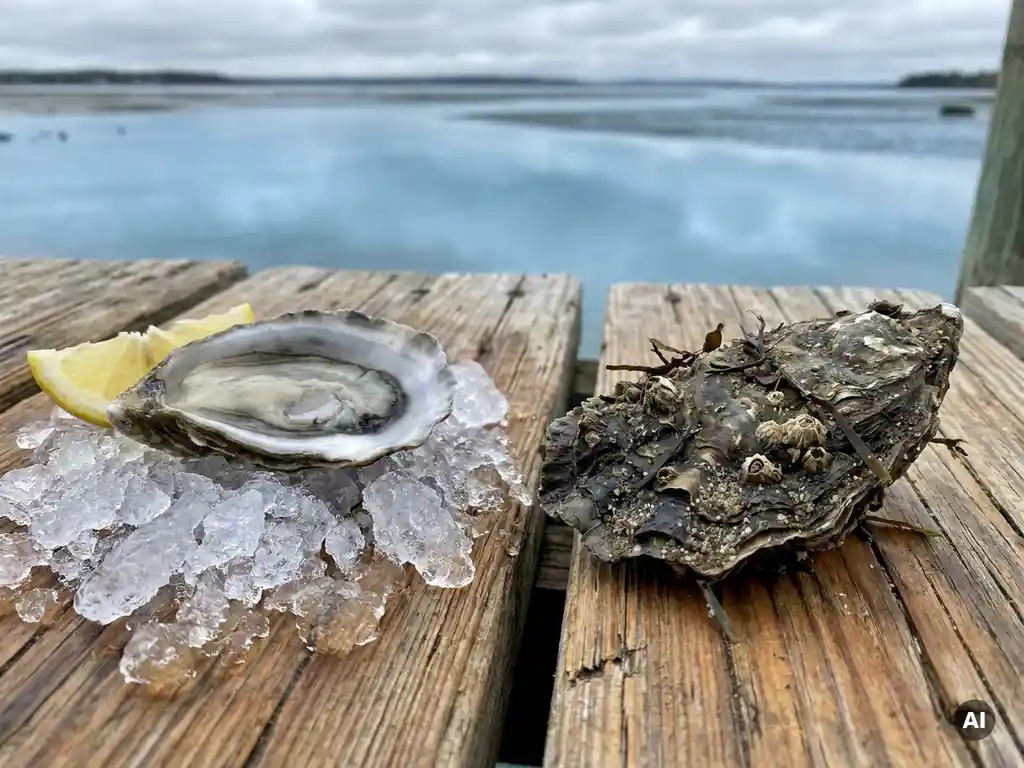
The main difference between farmed and wild oysters lies in the way they are produced, and this has a direct impact on taste, availability, and price. Farmed oysters grow in controlled environments such as oyster beds or suspended cultures, whereas wild oysters live freely on the seabed and are harvested by hand or via trawling nets. For professional buyers, understanding this distinction is essential to making the right choice for their assortment.
How are farmed and wild oysters produced?
Farmed oysters are raised on oyster beds or in suspended cultures, where the grower influences the growing conditions, food supply, and harvest period. Wild oysters grow without human intervention on rocks, reefs, or the seabed and are harvested when they have reached a suitable size. The production method largely determines the consistency of the final product.
In oyster farming, young oysters, also spat , are collected or cultivated in a brood chamber and subsequently transferred to plots at sea. Depending on the method, they grow in hand baskets, in bags on tables, or on the seabed. The grower actively manages quality by regularly turning, sorting, and moving the oysters to optimal locations. This makes it possible to deliver a predictable and uniform product.
Wild oysters are found in places where they naturally occur, such as rocky coasts, estuaries, and shallow seas. They are harvested via hand diving, raking, or trawling. Because nature determines where and when they grow, the harvest is more unpredictable and depends on the season, water temperature, and available populations.
What are the taste and quality differences between the two types?
Wild oysters generally have a more intense, complex flavor than farmed oysters, because they grow in a more varied and uncontrolled environment. Farmed oysters are more consistent in flavor and quality, which can be a significant advantage for professional buyers. Both types can be excellent, but the flavor profile differs fundamentally.
The taste of an oyster is strongly determined by the water in which it grows: salinity, the type of algae, and water temperature all play a role. This phenomenon, also merroir , causes wild oysters from different locations to vary significantly in taste. A wild oyster from the Atlantic coast tastes different from one from a Scandinavian fjord.
Farmed oysters offer greater uniformity. The farmer can partially control the growing conditions, resulting in a more consistent size, a more even filling, and a more predictable taste. For restaurants or caterers who want a staple product on the menu, this is a practical advantage. Wild oysters are more appreciated by connoisseurs seeking a special, unique taste experience.
Which species are most commonly farmed or caught in the wild?
The most cultivated oyster species in the world is the Japanese oyster (Crassostrea gigas), also known as the creuse or hollow oyster. The most well-known wild oyster species is the European flat oyster (Ostrea edulis), also known as the belon or plate oyster . Both species have their own distinct character and a different position in the market.
The Japanese oyster dominates the farmed oyster market due to its rapid growth, robustness, and adaptability to diverse climates. It is farmed on a large scale in the Netherlands, France, and Ireland. The Gillardeau, a premium farmed oyster from France, is a prime example of how oyster farming can evolve into a luxury product with a strong brand.
The European flat oyster is becoming increasingly rare in the wild, as populations have historically been overfished and are susceptible to disease. Attempts to restore wild oyster reefs are underway in several European countries. In addition to these two main species, wild oysters from other regions are also appearing on the international market, each with its own distinct flavor profile and origin story.
How does availability vary throughout the year?
Farmed oysters are available year-round because production is controlled and predictable. Wild oysters have a strong seasonal supply and are often harder or impossible to obtain during the summer months due to the spawning season and higher water temperatures. For buyers seeking year-round supply, farmed oysters offer greater certainty.
During the warm summer months, oysters spawn, causing the texture to become milky and less appealing. This problem is more pronounced with wild oysters, as nature dictates the cycle. Cultivated varieties, such as triploid oysters that are genetically unable to spawn, remain tasty and marketable even in the summer.
For professional buyers who want to guarantee a stable supply, the availability of farmed oysters is therefore a concrete advantage. With wild oysters, one must take into account peaks in the autumn and winter, and the possibility that the supply may temporarily disappear due to weather conditions or population fluctuations.
What are the sustainability differences when sourcing oysters?
Oyster farming is widely regarded as one of the most sustainable forms of seafood production: oysters filter water, improve water quality, and require no feed or fertilizers. Wild oyster harvesting is sustainable when populations are healthy and catches remain limited, but can be problematic for overfished or vulnerable stocks. Origin and harvesting method are decisive.
Farmed oysters actively contribute to the marine ecosystem. They filter large volumes of water and help regulate algae growth. Furthermore, oyster shells sequester carbon, contributing to a positive environmental impact. Certified oyster farms are often transparent about their methods and have a low ecological footprint.
For wild oysters, sustainability depends heavily on the location and management of the fishery. Well-managed wild oyster catches can be responsible, but buyers would be wise to inquire about the origin, the fishing method, and any certifications. Traceability, the ability to trace the product's route, is particularly important for wild oysters to guarantee responsible sourcing.
As a wholesale buyer, when do you choose farmed or wild?
As a wholesale buyer, you choose farmed oysters when you require consistent quality, year-round availability, and predictable volumes. Wild oysters are the right choice when customers are looking for a distinctive flavor profile, an exclusive product, or an authentic story behind the oyster. The choice depends on the customer segment and the desired positioning.
For foodservice and catering clients requiring large volumes and consistency, farmed oysters offer the most certainty. They are easier to plan, portion, and process. For specialty seafood shops or restaurant clients looking to differentiate themselves on the menu, wild oysters can offer added value due to their character and exclusivity.
Price also plays a role: wild oysters are generally more expensive due to limited availability and higher labor costs during harvesting. Farmed oysters offer better value for money at larger volumes. A smart buyer combines both: farmed oysters as a base and wild oysters as a premium option for specific clients or occasions.
How Adri & Zoon helps with sourcing oysters
Adri & Zoon is one of the most specialized wholesalers of oysters, crustaceans, and shellfish in the Benelux. As an official Gillardeau dealer and with extensive knowledge of farmed oyster varieties, the company helps professional buyers make the right choice for their assortment. What sets Adri & Zoon apart:
- Specialized product knowledge: in-depth knowledge of oyster varieties, origin, flavor profiles, and seasons, so that you can properly inform your customers.
- Strong traceability: the origin and route of each product are easily traceable, including the story behind the oyster.
- Wide assortment: from farmed premium oysters to various varieties, as a one-stop shop for fish and shellfish.
- Thinking along with the customer: no standard solutions, but advice that aligns with your specific customer segment and purchasing needs.
- Reliable supply: via established relationships with growers worldwide, with our own transport for controlled delivery.
Would you like to know more about the story behind Adri & Zoon , or are you curious about what we can do for your purchasing needs? Contact us and discover how we help professional buyers with the right oyster selection, all year round.