

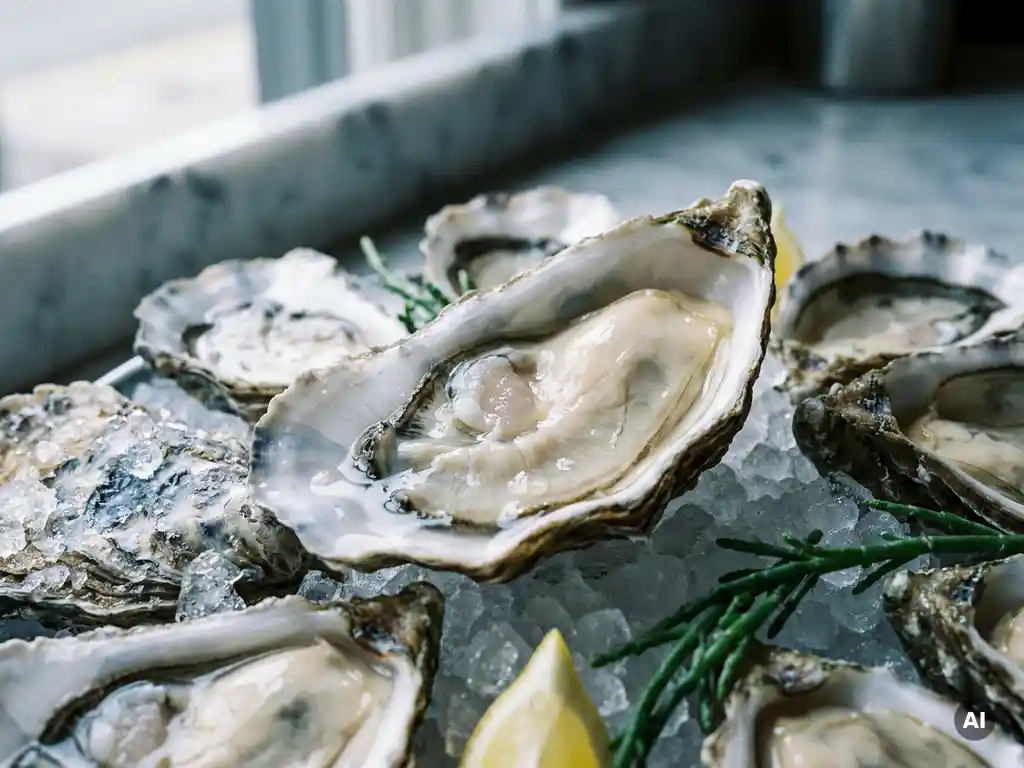
You can identify the best oysters for your assortment by three factors: species, origin, and quality. For professional buyers, the distinction between the flat oyster and the creuse oyster is the starting point, supplemented by knowledge of farming area, shell shape, and taste profile. The questions below will help you make a well-considered choice for your customers and concept, step by step.
What are the most important oyster varieties you can buy?
The two most common oyster species for professional purchasing are the common oyster (Ostrea edulis) and the giant oyster (Crassostrea gigas). The common oyster is the native European species, with a round, flat shell and a nutty, mineral flavor. The giant oyster is recognizable by its elongated shell and is by far the most cultivated species in the world.
In addition to these two basic types, there are special varieties that hold a premium position in the assortment. Within commercial categories, a distinction is made between Fines and Spéciales: Fines are generally less fleshy and more affordable, while Spéciales are fuller, fleshier, and of higher quality. The Gillardeau oyster is a well-known example of a Spéciale: a certified variety with a recognizable brand and a specific cultivation process. Furthermore, there are regional varieties such as the Zeeland creuse and the Belon from Brittany, each with its own taste profile and target audience. For a strong oyster assortment, it is advisable to offer at least both main types and, depending on your customer base, to choose one or more premium varieties.
How do you assess the quality of oysters when purchasing?
You assess the quality of oysters during purchase based on five points: the closure of the shell, the weight, the smell, the meat percentage, and the documentation of origin. A fresh oyster is closed or closes immediately when you tap it. Light oysters with little meat in proportion to the shell are a sign of substandard quality.
- Shell closure: a well-closed shell is the first signal of quality.
- Weight: a full oyster feels heavy for its size.
- Scent: fresh seawater air, never acidic or ammonia.
- Meat percentage: the meat should be firm, glossy, and well-filled.
- Traceability: always check the origin documentation and the cultivation area.
Origin is also a quality indicator. Oysters from clean, well-managed farming areas — such as those in France, Ireland, and Zeeland — with low nutrient levels in the water generally have a finer flavor profile. Water temperature, salinity, and food availability in the farming area also contribute to how an oyster tastes and how firm the flesh is.
What is the difference between farmed and wild oysters?
Farmed oysters are cultivated under controlled conditions in farms or at sea, whereas wild oysters grow naturally on hard substrates without human intervention. In practice, virtually every commercially available oyster is a farmed species. True wild oysters are rare and less consistent in quality and size.
Farmed oysters offer the advantage of being more manageable in terms of size, taste, and availability. Growers actively manage the cultivation process: from seed to market-ready oyster, this takes an average of two to four years for the creuse oyster, and longer for the flat oyster. Various cultivation methods are employed, such as hand baskets, bags on tables, and seabed culture, each influencing the shape and taste of the oyster. For most hospitality concepts and seafood shops, a consistent, high-quality farmed oyster is the most reliable choice.
Which oyster varieties suit which type of client or concept?
The right oyster variety depends on the concept and customer experience a buyer wishes to offer. Creuse oysters are versatile, accessible in taste, and suitable for a broad audience. Flat oysters and premium varieties such as the Gillardeau are better suited to a fine-dining setting or a specialized seafood shop with a discerning clientele.
- Fish shop (broad audience): creuse oysters in various sizes, optionally supplemented with a recognizable premium brand.
- Bistro or brasserie: creuse as standard, flat oyster as a seasonal offering.
- Fine dining: Gillardeau, Belon, or other certified premium oysters with a clear story about their origin.
- Caterer or event specialist: Creuse in larger packaging, practical and consistent in quality.
- Delicatessen shop: mix of varieties with an emphasis on origin story and exclusivity.
For professional buyers, it is also relevant to know how their customers present oysters. Those who serve oysters as part of a seafood platter have different needs than those who offer them as a standalone experience with matching wine or champagne.
How do you recognize a premium oyster like the Gillardeau?
You can recognize a Gillardeau oyster by the engraved logo on the shell: a small “G” branded in as a trademark. This is not decoration, but a protective measure. The Gillardeau is a certified oyster cultivated by the French producer Familie Gillardeau via a specific multi-phase process along the Atlantic coast of France.
What distinguishes the Gillardeau from other creuse oysters is the combination of a thick, firm shell, a high meat content, and a pronounced flavor profile with both salty and slightly sweet notes. As a Spéciale, the Gillardeau is characterized by a full, rounder shape and a dense structure. The cultivation process takes longer than for standard creuse oysters, which contributes to the density and flavor of the meat. For professional buyers, the Gillardeau is attractive because it is a recognizable brand that sells itself: customers know the name and associate it with quality.
Pay attention to the authenticity marking when purchasing. Counterfeit or incorrectly labeled oysters are present on the market. Therefore, always buy Gillardeau oysters from a recognized dealer.
What should you pay attention to when putting together an oyster assortment?
When compiling an oyster assortment, you pay attention to four elements: breadth of the selection, consistency of supply, recognizability for the customer, and margin structure. A good assortment includes at least one accessible creuse, a flat oyster for the connoisseur, and a premium option for customers willing to pay more.
- Breadth: offer multiple varieties so customers can choose based on taste and budget.
- Sizes: creuse oysters are available in sizes from 1 to 5; size 3 is a common, accessible size for the hospitality industry, while sizes 4 and 5 are smaller.
- Seasonality: flat oysters are less available in the summer due to the spawning season; creuses are available all year round.
- Origin story: customers want to know where an oyster comes from; make sure you can communicate this.
- Packaging: match the packaging form to the use, from individual boxes to presentation packaging.
A common mistake when curating an oyster assortment is offering too many varieties without clear distinction. It is better to choose a limited, well-explained selection than a broad range without a story.
How Adri & Zoon helps professional buyers with oysters
Adri & Zoon is a wholesaler of fish and shellfish with years of specialist knowledge of oysters. As an official Gillardeau dealer in the Benelux, the company offers access to one of the most sought-after premium oysters on the market, alongside a wide range of oysters of diverse origins and quality levels.
What sets Adri & Zoon apart for professional buyers:
- Wide selection: from accessible creuse to exclusive premium oysters such as the Gillardeau.
- Strong traceability: the origin and route of every product can be accurately traced, so you can tell your customers the full story.
- Product knowledge: the team has in-depth knowledge of oyster varieties, farming regions, and flavor profiles, and actively helps determine the best assortment for your concept.
- Custom packaging: oysters are packed according to your wishes, from standard boxes to presentation packaging.
- Own transport: delivery with full control over the cold chain.
Would you like to know which oyster varieties best suit your assortment? Contact Adri Adri & Zoon for personal advice, or read more about the story behind the company.