

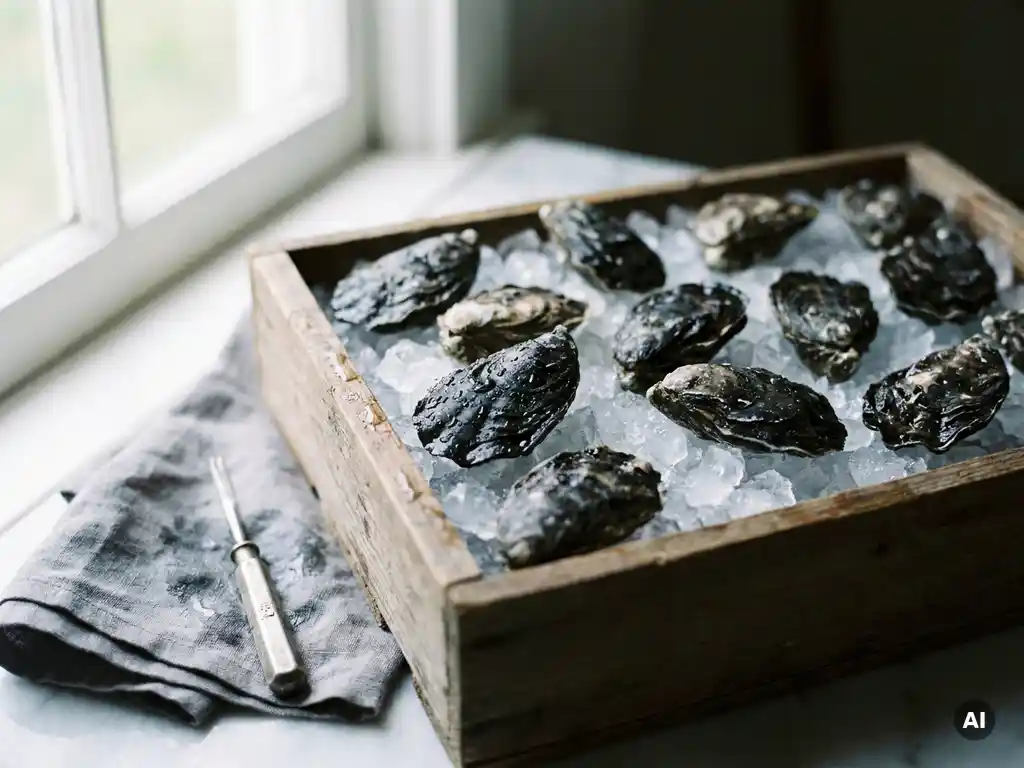
Oysters are best stored at a temperature between 4 and 8 degrees Celsius, with the rounded side down and covered with a damp cloth. This way, fresh oysters in the shell will remain edible for about a week after purchase. The exact shelf life depends on their freshness at the time of purchase and the storage method. In this article, you will find answers to the most frequently asked questions about storing oysters, from storage temperature to recognizing a spoiled oyster.
How long do oysters keep after purchase?
Fresh oysters in the shell have an average shelf life of five to seven days, provided you store them immediately and correctly. The shelf life begins the moment the oyster is taken out of the water, not just when you buy them. Always ask for the catch or harvest date when purchasing to know how much time you have left.
Oysters are living animals. As long as the shell remains closed and the oyster retains sufficient moisture, it stays alive and is edible. The fresher the oyster is at the time of purchase, the longer you can keep it at home. If you buy oysters from a reliable supplier with a short supply chain, you generally have more leeway. If you wait too long to eat them, the quality deteriorates quickly, even if the oyster is not yet technically spoiled.
What is the correct storage temperature for oysters?
The ideal storage temperature for oysters is between 4 and 8 degrees Celsius. At this temperature, the oyster remains alive without freezing. Too cold is just as harmful as too warm: below freezing, the oyster dies and loses its texture and flavor.
Never store oysters in the freezer compartment of the refrigerator or directly next to the ice packs. The average household refrigerator typically has a temperature of 4 to 7 degrees, which is fine for oysters. However, ensure that the temperature remains stable. Frequently opening the refrigerator or placing warm products nearby can cause the temperature to rise temporarily, which shortens the shelf life of the oysters.
How do you store oysters in the refrigerator?
Place oysters in the refrigerator with the rounded side down and the flat side up. This way, the oyster retains moisture in the shell, which is essential to keep it alive. Cover the oysters with a damp cloth or a piece of damp newspaper and store them in an open container or colander so that excess moisture can drain away.
Never store oysters in a sealed plastic bag or airtight container. Oysters breathe and need air. In a confined space, they suffocate and spoil quickly. Also, do not place ice directly on the oysters, as meltwater and fresh water are harmful to them. Use ice only as a base layer in a container so that the oysters remain cool without coming into contact with the meltwater.
Can you freeze oysters?
Freezing raw oysters in the shell is strongly discouraged. Freezing kills the oyster and changes the texture of the meat: it becomes rubbery and loses its typical salty, creamy taste. Anyone wishing to eat oysters raw must always keep them fresh.
However, there are situations where freezing is an option. You can freeze oysters intended for hot preparations, such as in soup, sauce, or gratin, after opening them. Remove the oyster meat from the shell, store it together with the liquid in a sealed container, and freeze it. Preferably use frozen oyster meat within two months and thaw it slowly in the refrigerator. Never serve frozen oysters raw.
How do you know if an oyster is still fresh?
A fresh oyster smells like the sea: fresh, salty, and slightly mineral. If the oyster smells strong, sour, or like ammonia, it is spoiled and you must throw it away. Also look at the shell: a fresh oyster in the shell is closed or closes when you tap it. If the oyster does not respond, it is dead.
When you open an oyster, also check the meat itself. The meat should be firm, glossy, and surrounded by clear, briny liquid. Cloudy, milky liquid or meat that looks limp and dry are signs that the quality has deteriorated. If in doubt, throw the oyster away. Eating a spoiled oyster poses serious health risks.
What is the difference between storing an opened and an unopened oyster?
An unopened oyster in the shell is alive and, if stored correctly, can keep for five to seven days. An opened oyster must be consumed as soon as possible, preferably immediately after opening, and in any case within 24 hours if stored in the refrigerator.
As soon as you open an oyster, it loses its protected environment. The moisture evaporates faster, bacteria gain access, and the meat dries out. If you want to open oysters in advance for dinner, do so no more than an hour beforehand and store them in the shell on a bed of ice. Place a damp cloth over them to prevent drying out. For the best taste experience, always open oysters as shortly as possible before serving.
How Adri & Zoon helps with oysters, mussels, and shellfish
As a professional buyer, you not only want to know how to store oysters, but also be certain that the oysters you purchase are fresh, easily traceable, and of the highest quality. That is exactly where Adri & Zoon makes the difference. As a family business with over forty years of experience and an official Gillardeau dealer in the Benelux, Adri & Zoon in-depth knowledge of oysters: from origin and farming methods to taste profile and shelf life.
What Adri & Zoon offers for professional clients:
- Wide range of oysters, mussels, and shellfish as a one-stop shop for fish and seafood.
- Strong traceability: the origin and route of every product can be accurately traced, so you can tell your customers the story behind the oyster.
- Specialized product knowledge regarding oysters, including advice on varieties, quality, and storage.
- Continuous supply of fresh and frozen products via our own facility in Iceland and sourcing from suppliers worldwide.
- Thinking along with the customer: not just delivering, but also offering solutions that align with your specific needs.
- Own transport for deliveries, with full control over the chain up to delivery.
Would you like to know more about the product range, or would you like to discuss a collaboration as a professional buyer? Contact Adri Adri & Zoon or view the possibilities at adrienzoon.com.