

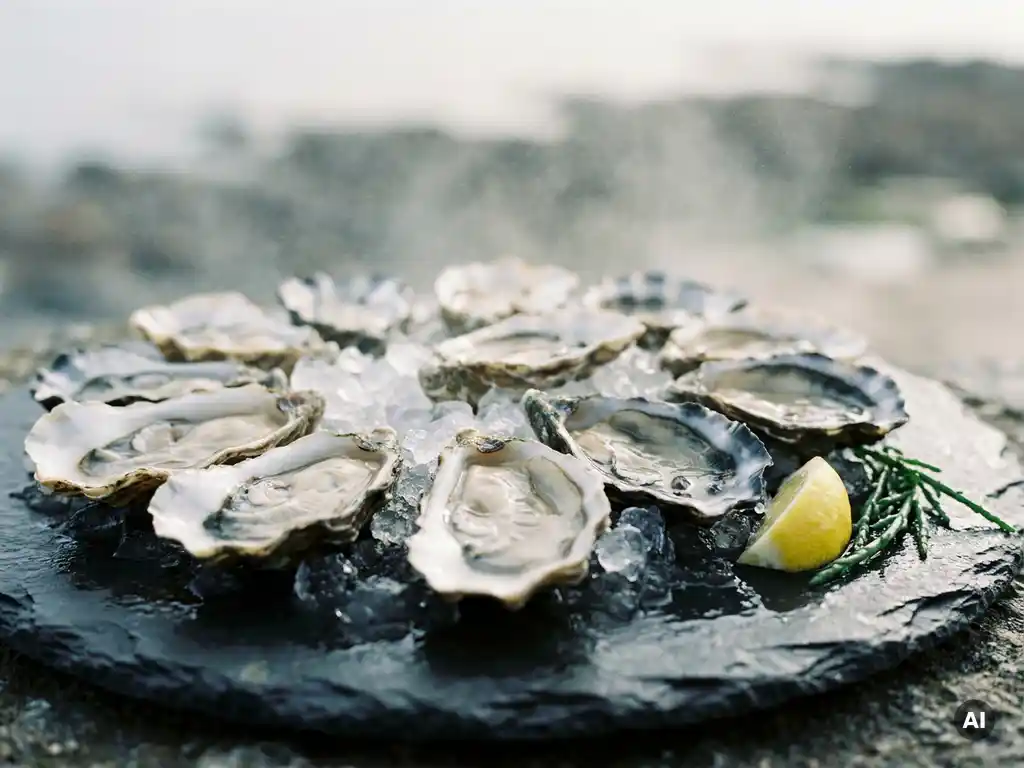
The best oysters in the world come from France, Ireland, and Japan, but which oyster takes the top spot depends heavily on personal preference. Taste, texture, and origin all play a role. Connoisseurs do agree, however, that top oysters have a perfect balance of salinity, sweetness, and a fresh, mineral finish. The questions below will help you understand what makes an oyster truly special, from species and origin to season and freshness.
Which oyster species are considered the most prized?
The most prized oyster species in the world are the European smooth oyster (Ostrea edulis), the Japanese hollow oyster (Crassostrea gigas), and the Olympia oyster from North America. Among the hollow oysters, Gillardeau oysters from France are considered the absolute top. These species are distinguished by a complex flavor, firm texture, and consistent quality built up over generations.
Within the world of fine oysters, the Gillardeau holds a special status. This French family business cultivates its oysters according to a strict selection process that takes several years. The oysters are hand-selected, regularly moved, and exposed to the tides of the Atlantic Ocean. The result is an oyster with a powerful, nutty flavor and a meaty texture that few other oysters match.
Other names that are highly regarded internationally are the Belon from Brittany, the Spéciale de Claire from Marennes-Oléron, and the Kumamoto from Japan and the American West Coast. Each of these varieties has its own flavor profile that is strongly determined by the environment in which it grows.
What makes an oyster top quality?
A top-quality oyster is distinguished by a combination of factors: the origin of the water, the cultivation technique, the growth period, and the care during processing and transport. Oysters absorb everything from their environment, meaning that clean, mineral-rich water directly contributes to a better taste. Growers who take the time for slow growth generally produce a meatier and more flavorful product.
Specifically, experts look at the following when assessing oyster quality:
- Meat-to-shell ratio: a full, meaty oyster with little moisture in the shell indicates healthy growth.
- Smell: a fresh oyster smells of the sea, fresh and slightly salty, never fishy or ammonia-like.
- Color of the meat: bright, creamy, or light gray, depending on the variety
- Flavor balance: a good oyster has a balance between saltiness, sweetness, and minerality.
- Origin and traceability: top growers can demonstrate the complete route of their product
In addition to the cultivation phase, the processing chain is also a determining factor. Oysters that are transported quickly and carefully at the right temperature retain their quality significantly better than oysters that have been in transit for a long time under varying conditions.
What is the difference between a flat and a hollow oyster?
The biggest difference between a flat oyster and a hollow oyster lies in the species, the taste, and the farming method. The flat oyster (Ostrea edulis), also known as Belon, has a round, flat shell and a strong, nutty, and sometimes metallic flavor. The hollow oyster (Crassostrea gigas), also known as the creuse oyster or Japanese oyster, has an elongated, curved shell and a milder, fresher taste.
The flat oyster is the original European species and is considered by connoisseurs to be the most complex and refined choice. However, it is more susceptible to diseases and climate change, causing production to decline sharply over the past few decades. This makes flat oysters rarer and often more expensive.
The hollow oyster is the most cultivated species worldwide. It is more robust, grows faster, and adapts better to changing conditions. There are significant quality differences within hollow oysters: from simple farmed oysters to hand-selected top varieties such as the Gillardeau. For professional buyers, it is important to know which class of oyster they are purchasing, as this directly determines the price and the end customer experience.
Which regions produce the best oysters?
The most famous oyster regions in the world are located in France, Ireland, Japan, and the American West Coast. France has been known for centuries as the heart of European oyster culture. Regions such as Brittany, Normandy, and Marennes-Oléron produce oysters with a distinct character that stems directly from the composition of the seawater and the seabed.
An overview of leading oyster regions:
- Marennes-Oléron, France: home of the Spéciale de Claire and the Gillardeau, with a unique microclimate due to the claire basins.
- Brittany, France: producer of the Belon, one of the most prized flat oysters in the world
- Ireland: known for the Galway Flat and the Carlingford oyster, cultivated in cold, clean Atlantic waters.
- Japan: birthplace of Crassostrea gigas, with regions such as Hiroshima and Miyagi as important production areas
- Pacific Northwest, USA and Canada: home of the Kumamoto and Olympia oysters, popular in gastronomy
What all these regions have in common is a combination of clean water, specific currents, a stable climate, and generations of farming expertise. The origin of an oyster is therefore not a minor detail, but a determining factor for the final taste and quality.
How do you recognize a fresh, good-quality oyster?
A fresh, good-quality oyster is firmly closed, smells of the sea, and has clear liquid inside the shell upon opening. The shell should feel heavy in proportion to its size, indicating a well-filled, meaty interior. An oyster that is light, open, or has an unpleasant odor is no longer fresh and must be rejected.
Practical checkpoints for assessing fresh oysters:
- The shell closes tightly and offers resistance when opening
- After opening, the meat reacts to touch or a drop of lemon juice
- The fluid in the shell is clear, not cloudy or milky
- The scent is fresh and salty, comparable to a fresh sea breeze
- The meat has a glossy appearance and a uniform color
For professional buyers, packaging and transport are also indicators of quality. Oysters that are transported chilled at a constant temperature between 2 and 8 degrees Celsius and are delivered quickly after harvesting are generally of higher and more reliable quality.
When is oyster season and what does that mean for quality?
The traditional oyster season runs from September to April, the months containing an “r” in French or English. During the summer months, oysters spawn, causing the meat to become softer, milkier, and less flavorful. Outside of the spawning period, oysters are available year-round, but the peak of flavor occurs in the colder months when the meat is firmer and fuller.
The old rule of thumb regarding the “r-months” is still partly relevant, but less absolute than in the past. Modern cultivation techniques make it possible to produce flavorful oysters in the summer as well. For instance, triploid oysters, a sterile variety of the hollow oyster, are specially cultivated to be eaten year-round without loss of quality due to the spawning process.
For professional buyers in the hospitality and foodservice industries, it is useful to know that demand for oysters peaks around holidays such as Christmas and New Year's. Purchasing in a timely manner and making arrangements with a reliable supplier are essential during this period to meet demand.
How Adri and Son helps with the sourcing of top-quality oysters
Adri en Zoon is a specialized wholesaler of fish, crustaceans, and shellfish, possessing extensive knowledge of oysters, from species and origin to cultivation methods and flavour profiles. As the official Gillardeau dealer in the Benelux, Adri en Zoon supplies one of the world's most highly regarded oyster brands directly to professional clients. But the offering goes beyond that.
What Adri en Zoon offers for professional oyster buyers:
- Wide range of oysters: from affordable farmed oysters to premium varieties such as the Gillardeau, for every segment and every occasion
- Strong traceability: full transparency regarding origin, farming location, and transport route, so you can tell your customer the story behind the oyster.
- Specialized product knowledge: advice on which oyster variety suits your assortment, season, or menu.
- Thinking along with the customer: not a standard solution, but an approach that aligns with your specific purchasing needs and customer group.
- Reliable delivery: own transport ensures control over the cold chain and timely delivery, even during busy periods.
Would you like to know more about the full range , or are you curious about what Adri en Zoon can do for your company? Contact us and discuss the possibilities with one of our specialists.