

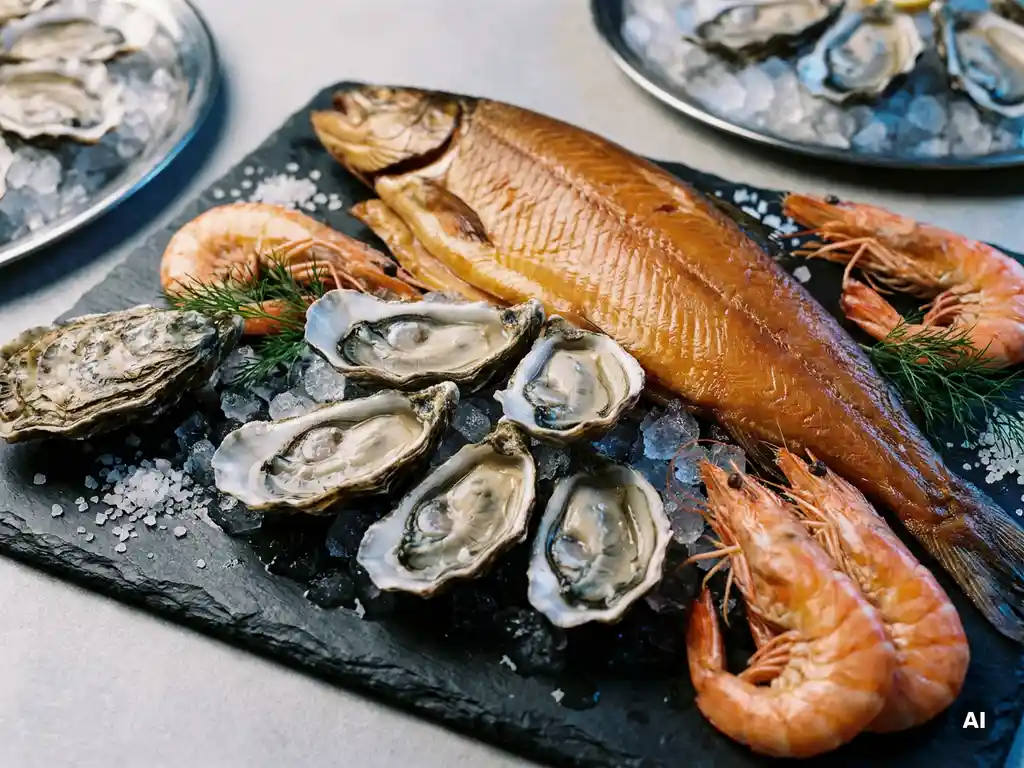
Seafood delicacies are fish products characterized by exceptional quality, rarity, origin, or a unique taste experience. Examples include oysters, caviar, smoked eel, scallops, and seafood such as lobster and langoustines. What makes a fish product a delicacy varies by product, but quality and exclusivity always play a central role. In this article, we answer the most frequently asked questions about luxury seafood products, from origin and storage to sourcing for professional kitchens.
What characteristics make a fish product a delicacy?
A fish product qualifies as a delicacy when it distinguishes itself in terms of taste, quality, rarity, or origin. Delicacies are products that are not commonplace, possess special culinary qualities, and offer a distinct experience in a professional kitchen or at the table. Availability, processing method, and traceability play a decisive role in this.
Specifically, it concerns a combination of the following characteristics:
- Rarity or limited availability: products that are seasonal or available in small quantities, such as wild salmon or flat oysters.
- Special origin: the region or farming method partly determines the taste and status of a product. Think of oysters from specific Atlantic coastal areas or shrimp from cold, clean waters.
- Artisanal processing: manual filleting, traditional smoking, or careful portioning significantly increase the value of a product.
- Exceptional taste and texture: delicacies are distinguished by a distinct, complex flavor that cannot be reproduced with standard products.
- Traceability: the ability to accurately trace the origin and route of a product is increasingly becoming part of the definition of quality for professional buyers.
Not every expensive fish product is automatically a delicacy, and not every delicacy is by definition expensive. It is about the combination of uniqueness and experience.
Which crustaceans and shellfish are considered delicacies?
Within the shellfish category, lobster, langoustines, scallops, and oysters are considered the most recognized delicacies. These products are regarded worldwide as luxury ingredients due to their taste, limited availability, or the labor-intensive way in which they are caught or farmed.
Oysters as a top delicacy
Oysters belong to the shellfish family and have been considered one of the most exclusive products from the sea for centuries. The taste varies greatly by species and origin. Spéciales are meatier and fuller in flavor than Fines, which are lighter and slightly saltier. Well-known varieties such as the Gillardeau oyster have a distinct character that sets them apart from common oysters. Zeeland oysters and oysters from the Atlantic coastal regions of France and Ireland enjoy a strong reputation in professional gastronomy.
Lobster, langoustines and scallops
Lobster is one of the most expensive shellfish in the world due to intensive fishing and limited availability. Langoustines, also known as scampi or Norwegian lobsters, are prized for their delicate, sweet meat. Scallops are popular in haute cuisine for their soft, buttery flavor and versatility in preparation. Crab, lobster, and spiny lobster also belong to the category of shellfish considered delicacies.
Which fish species are considered luxury or rare?
Salmon, sea bass, turbot, sole, and wild cod are considered luxury fish species in professional kitchens. Additionally, smoked eel, caviar, and certain white fish species are considered special or rare, depending on origin and fishing method.
An overview of the most prized luxury fish species:
- Turbot: a flatfish with firm, white flesh and a distinctive flavor. Turbot is considered one of the most valuable fish species in European gastronomy.
- Sole: also a flatfish with a fine, delicate flavor. Sole is a classic luxury item on the menu of upscale restaurants.
- Wild salmon: unlike farmed salmon, wild salmon is seasonal and has limited availability, which increases its exclusivity.
- Smoked eel: a traditional Dutch delicacy with a rich, full flavor. Smoked eel is used both as a snack and in hot dishes.
- Caviar: fish eggs, particularly those of sturgeon, are considered one of the most exclusive delicacies in the world. Caviar is served on blinis or as a finishing touch to cold dishes.
- Sea bass: a slender sea fish with white, tasty flesh. Sea bass is popular in Mediterranean cuisine and is appreciated for its subtle flavor.
Smoked salmon holds a special position: it is a product widely used in both the luxury segment and the everyday hospitality industry, but with high quality and careful processing, it can certainly be considered a delicacy.
What is the difference between a delicacy and a premium product?
A delicacy is a product valued for its distinctive taste, rarity, or culinary tradition. A premium product is a high-quality product within a standard category. The difference lies in exceptionality: a delicacy is intrinsically special, whereas a premium product is the best version of something commonplace.
In concrete terms: high-quality salmon from a reliable farm is a premium product. Wild salmon from a specific river, available during a limited season, is a delicacy. Conventional shrimp are a common product; Dutch shrimp, hand-peeled and delivered fresh, can be considered a delicacy due to their origin and preparation method.
For hospitality professionals, this distinction is relevant when compiling menus. Premium products offer consistent quality year-round. Delicacies add exclusivity to the menu and justify a higher price, but also require more knowledge of origin, storage, and presentation.
How do you properly store and handle delicate fish products?
Delicate fish products require careful storage at low temperatures, minimal exposure to air, and rapid processing after delivery. Proper storage begins upon receipt: check the temperature, packaging, and expiration date immediately upon arrival.
Practical guidelines per product group:
- Fresh fish and fillets: store at 0 to 2 degrees Celsius, preferably on ice or in chilled water. Vacuum packaging significantly extends shelf life and preserves the taste better.
- Oysters and shellfish: store live oysters in a cool, humid place between 5 and 10 degrees. Place them with the rounded side down to retain the oyster liquid. Do not store in fresh water.
- Lobster and shellfish: store live lobster in the refrigerator, preferably wrapped in moist seaweed or a damp cloth. Do not place in stagnant fresh water.
- Smoked products: store smoked salmon and smoked eel in the refrigerator, tightly sealed. Vacuum packaging is ideal. Process quickly after opening.
- Caviar: store caviar at -2 to -4 degrees Celsius. Do not use metal spoons when serving, as metal negatively affects the taste.
When preparing delicacies, less is more. Fine products such as scallops or turbot call for a light preparation method that enhances the flavor rather than masks it. Manual processing, such as hand filleting, provides more control over the final result than machine processing, especially for special cuts or delicate products.
Where can hospitality professionals purchase seafood delicacies?
Hospitality professionals can purchase seafood delicacies from specialized fish wholesalers that have a wide assortment, direct relationships with fishermen and farmers, and sufficient product knowledge to advise on origin and applications. A reliable wholesaler offers not only products but also consistency in quality and delivery.
The following criteria are relevant when choosing a supplier:
- Breadth of the assortment: a one-stop shop saves time and logistical complexity. Look for a supplier who can provide both standard fish and exclusive delicacies.
- Traceability: for delicacies, origin information is essential, both for quality control and for the stories chefs want to tell their guests.
- Customization in processing and packaging: professional kitchens require products that are portioned, vacuum-packed, or packaged to order. Not all wholesalers offer this.
- Continuity of supply: delicacies are sometimes seasonal. A supplier with international sourcing capabilities can offer alternatives even out of season.
- Product knowledge: a wholesaler who thinks along regarding applications, serving suggestions, and product combinations adds more value than a purely transactional supplier.
How Adri & Zoon helps with the purchasing of seafood delicacies
Adri & Zoon is a professional fish wholesaler that supplies hospitality businesses, restaurants, and caterers with a wide range of fish, crustaceans, and shellfish, including luxury fish products and delicacies. From its location in Yerseke, the company delivers throughout the Netherlands and Belgium six days a week, using its own transport and with full control over the cold chain.
What distinguishes Adri & Zoon for professional buyers of seafood delicacies:
- Wide range of delicacies, including oysters (also Gillardeau as official Benelux dealer), scallops, lobster, smoked salmon, smoked eel, and caviar.
- In-house hand filleting facility for special cuts and custom portioning that is not possible by machine.
- Flexible packaging options, including vacuum and eco-friendly packaging, tailored to the customer's wishes.
- Strong traceability: the origin and route of every product can be accurately traced, allowing chefs to tell the story behind their ingredients.
- Specialized product knowledge, particularly regarding oysters and shellfish, that helps clients better inform their own guests.
- Continuous supply of fresh whitefish via our own branch in Iceland, even outside the regular season.
Would you like to know which seafood delicacies are suitable for your menu or festive event? Contact Adri Adri & Zoon for personal advice and a suitable selection.