

The best caviar in the world comes primarily from countries around the Caspian Sea, particularly Iran and Russia, but also from European farms in countries such as France, Italy, and Belgium. Which country produces the absolute best depends heavily on the sturgeon species, the farming conditions, and the processing. In this article, we answer the most frequently asked questions about caviar: from origin and varieties to quality and applications in the professional kitchen.
Which countries produce the most prized caviar?
The world's most prized caviar traditionally comes from Iran and Russia, where sturgeon were caught in the Caspian Sea for centuries. Today, the production of wild sturgeon is strictly regulated or prohibited, causing farmed caviar from European countries to gain significant importance. France, Italy, Poland, and Belgium are now among the leading producers of high-quality caviar.
Iran remains known for its top-class Beluga caviar, characterized by large, soft grains and an exceptionally creamy taste. Russian caviar, particularly Ossetra, has also built a strong reputation due to its nutty, complex flavor profile. In Europe, French caviar from farms in the Gironde region is particularly respected. Italian producers, especially in the Po Valley, also deliver excellent quality through their careful farming techniques and strict selection.
China has meanwhile grown into one of the largest producers of farmed caviar in the world, although quality varies considerably by producer. For the professional kitchen, it is therefore important to look beyond the country of origin and pay attention to the specific producer and the sturgeon species used.
Which sturgeon species produce the best caviar?
The three most prized sturgeon species for caviar are the Beluga, the Ossetra, and the Sevruga. The Beluga yields the largest and softest grains with a creamy, mild flavor and is considered the most exclusive caviar. Ossetra has medium-sized grains with a nutty, sometimes slightly iodine-like character. Sevruga has smaller, more intense grains with a pronounced salty taste.
Beluga: the most exclusive choice
The Beluga sturgeon (Huso huso) can live for decades before producing harvest-ready roe. This makes Beluga caviar rare and precious. The grains are large, soft, and have a delicate, almost buttery flavor that requires little addition. Due to the protected status of the wild Beluga sturgeon, genuine Beluga caviar today comes exclusively from certified farms.
Ossetra and Sevruga: versatile alternatives
Ossetra caviar (Acipenser gueldenstaedtii) is slightly more accessible than Beluga, but certainly no less interesting. The taste is more complex and nutty, with a good balance between salt and umami. Sevruga (Acipenser stellatus) matures faster, resulting in a slightly more affordable caviar with a powerful, pronounced flavor. For kitchens wishing to work with caviar in dishes or appetizers, Sevruga offers good value for money.
What determines the quality and taste of caviar?
The quality of caviar is determined by a combination of factors: the sturgeon species, the age of the fish at the time of harvest, the water quality, the processing, and the amount of salt used. Low-salt caviar, referred to as malossol (Russian for “low salt”), is considered the highest quality class and best preserves the natural flavor of the roe.
The color, size, and firmness of the grains also play a role. Larger, intact grains that do not clump together indicate careful processing. The color varies from light gray to dark brown or even golden, depending on the species and the sturgeon's diet. A golden-yellow or amber color, such as that of the rare Almas caviar, indicates a particularly old albino sturgeon and is exceptionally valuable.
The temperature during storage and transport is also a determining factor for the final quality. Caviar is sensitive and must be kept continuously refrigerated, preferably between zero and two degrees Celsius. Any interruption in the cold chain directly affects the taste and shelf life.
What is the difference between wild and farmed caviar?
Wild caviar comes from sturgeon living in their natural habitat, such as the Caspian or Black Sea. Farmed caviar comes from sturgeon raised in controlled conditions in hatcheries. Today, virtually all legally sold caviar in the world is of farmed origin, because the international trade in wild sturgeon and its roe is strictly regulated through the CITES treaty.
In the past, wild caviar was considered superior due to the free-living environment and varied diet of the sturgeon. However, modern farms have made great strides in mimicking natural conditions. By using clean, oxygen-rich water, a carefully managed diet, and sufficient space for the fish, the best European farms produce caviar that is hardly inferior to the wild alternative in terms of taste and quality.
An additional advantage of farmed caviar is traceability: the origin, age of the fish, and processing are well documented. For professional kitchens that value transparency in the supply chain, this is an important argument.
How do you recognize real quality caviar?
True quality caviar is recognizable by intact, glossy grains that are spaced apart, a fresh aroma without unpleasant or overly salty notes, and a long-lasting taste with a soft, creamy finish. The packaging must clearly state which sturgeon species was used, the country of origin, the production date, and a CITES certification as proof of legal origin.
Pay attention to the following features when purchasing:
- Grain integrity: the grains are intact, not cracked or clumped together.
- Scent: fresh and sea-like, without ammonia or excessive fishy odor
- Taste: a good balance between salt and umami, with a long, pleasant finish.
- Color: consistent in tint, matching the indicated species
- Labeling: complete information on species, origin, processing and certification
Caviar designated as malossol contains less than five percent salt and is considered the most refined form of processing. Products with a high salt content are often of lower quality or intended for a longer shelf life at the expense of taste.
Which caviar is best suited for a professional kitchen?
For a professional kitchen, the choice of caviar depends on the type of dish, the price level of the restaurant, and the desired flavor intensity. Beluga caviar suits the most exclusive applications, such as served pure on a blini with crème fraîche. Ossetra is more versatile and lends itself well to amuse-bouches, starters, and pairings with fish or seafood. Sevruga offers a powerful flavor that also comes into its own in dishes.
In practice, many professional kitchens choose Ossetra as the standard quality caviar: the flavor is complex enough to impress, the grains are easy to handle, and the price is more realistic than that of Beluga. For festive menus, Christmas dinners, or special tasting menus, an upgrade to Beluga can elevate a dish to a higher level.
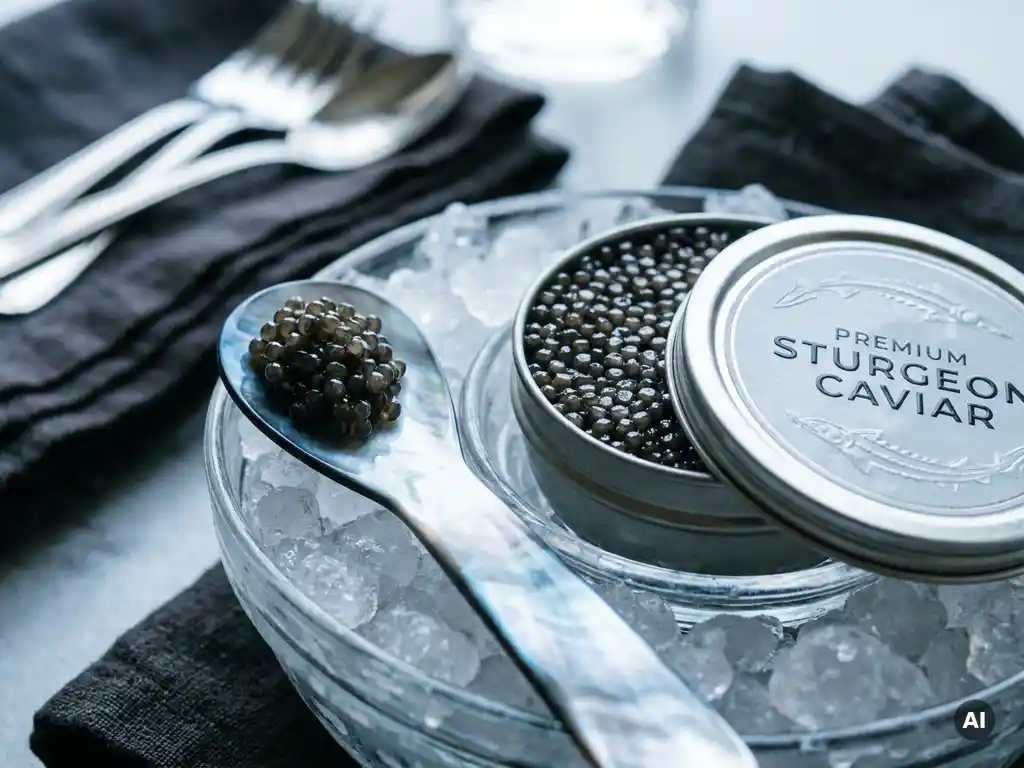
When using it, also consider the presentation: caviar is traditionally served with mother-of-pearl or wooden spoons, as metal can affect the taste. Combinations with neutral accompaniments such as blinis, potato, or lightly toasted bread allow the flavor of the caviar to come into its own.
Caviar in your kitchen via Adri & Zoon
As a professional fish wholesaler with years of experience in delicacies, Adri & Zoon caviar as part of a wide range of luxury fish products. Whether you are looking for caviar for a festive starter, a special Christmas menu, or a refined amuse-bouche: Adri & Zoon actively helps you find the best choice for your kitchen.
What distinguishes Adri & Zoon for professional customers:
- Wide assortment: caviar alongside other delicacies such as smoked salmon, smoked eel, and Dutch shrimp.
- Traceability: clarity regarding origin, sturgeon species, and processing
- Customization: products are packaged and delivered tailored to your kitchen
- Product knowledge: specialist knowledge of delicacies and applications in the hospitality industry
- Own transport: controlled delivery while maintaining the cold chain
View the complete range Adri & Zoon or contact us for personal advice on caviar and other luxury fish products for your professional kitchen.