

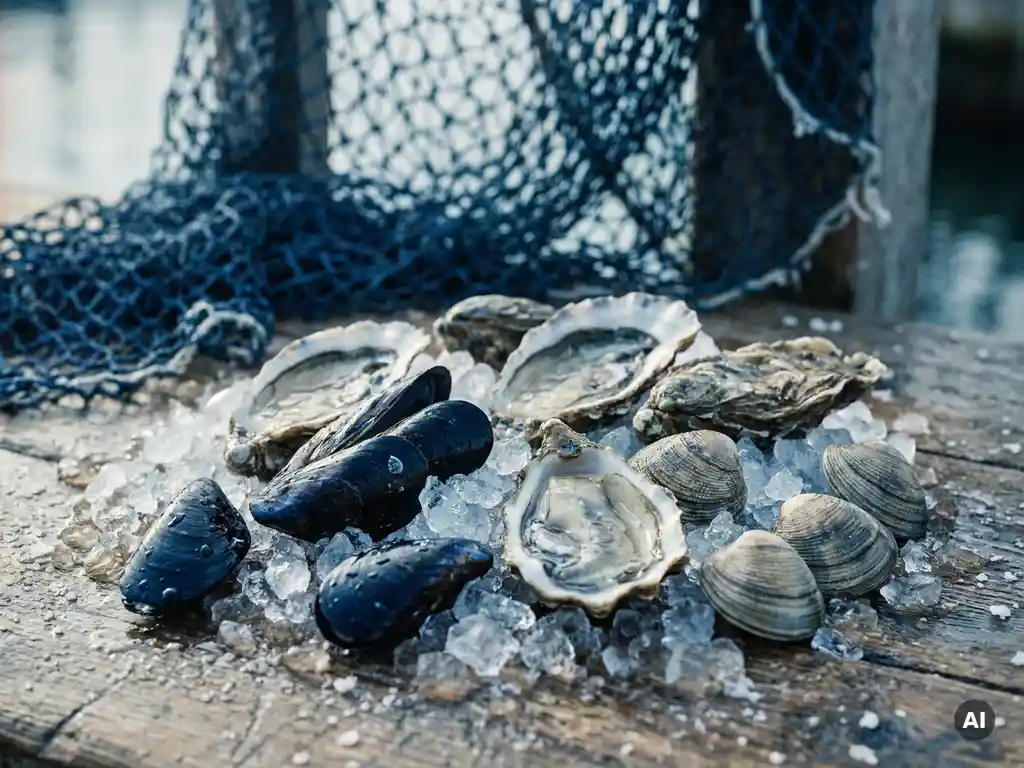
You choose the best shellfish for your dish based on flavor profile, texture, and preparation method. Mussels are versatile and suitable for daily use in the professional kitchen, while oysters and scallops are more suitable for refined dishes and special occasions. Shrimp form a flexible basic ingredient that fits into almost any kitchen concept. In this article, we answer the most frequently asked questions about choosing shellfish, recognizing quality, and finding the right supplier.
Which shellfish pair best with which dish?
The choice of the right shellfish depends on the desired flavor intensity, texture, and preparation technique. Mussels are ideal for stews, soups, and pastas. Oysters are almost always served raw and require a neutral, elegant setting on the plate. Scallops lend themselves perfectly to grilling or searing, while shrimp excel in both hot and cold preparations.
Below is a practical overview of the most commonly used shellfish and their culinary applications:
- Mussels: ideal in broth, white wine, or tomato sauce. Suitable as a main course or side dish.
- Oysters: raw on ice, optionally with a light vinaigrette or mignonette. Suitable for luxury starters and intermediate courses.
- Scallops: briefly seared or grilled, excellent as a warm starter or in combination with a creamy sauce.
- Shrimp: versatile in pasta, risotto, stir-fries, cold dishes, and as a snack.
- Lobster and crab: for festive dishes and high-end menu concepts, often grilled or incorporated into a bisque.
In a professional kitchen, it is wise to match the flavor intensity of the shellfish to the other components of the dish. Oysters and scallops call for restraint in the side dishes. Mussels and shrimp tolerate more flavorful sauces and spices.
How do you recognize high-quality fresh shellfish?
You can recognize high-quality fresh shellfish by closed shells, a fresh sea scent, and a firm, glossy texture. Shellfish that are already open before preparation and do not close upon touch are no longer suitable for consumption. An ammonia-like or sour smell is also a reliable sign of diminished freshness.
When assessing quality, pay attention to the following characteristics:
- Scent: fresh, salty, and pure sea air. Never ammonia, sour, or rotting.
- Shells: closed or close immediately upon touch. Cracked or broken shells indicate damage or poor storage.
- Color and sheen: the meat is light in color, not dull or gray.
- Weight: fresh shellfish feel heavier than empty or old ones.
- Moisture: a little moisture in the packaging is normal, but excessive moisture or cloudy juice is a warning sign.
For professional kitchens, it is also important to pay attention to the packaging and the storage temperature during transport. Shellfish that have been too warm during delivery may look good on the outside but still spoil more quickly. Always ask your supplier about the cold chain and the date of catch or harvest.
When is the best season for shellfish?
The best season for shellfish varies by species. Zeeland mussels are generally available from approximately June through February, with summer forming a significant part of the season. Oysters are available year-round but are considered particularly flavorful during the colder months. Shrimp and scallops also have seasonal patterns that differ by origin.
An overview by commonly used shellfish:
- Mussels: the Zeeland mussel season generally runs from June through February. Outside this season, alternatives from other countries of origin are available.
- Oysters: available all year round, but at their most flavorful in autumn and winter. During the holidays, they are particularly popular in the hospitality industry.
- Scallops: the high season falls in autumn and winter. Fresh scallops are at their best then in terms of taste and texture.
- Shrimp: available all year round depending on the species and origin, with peaks in the summer months for Dutch shrimp.
Professional kitchens would do well to align their menus with the season. Not only for taste, but also for availability and price. A reliable supplier can inform you in a timely manner about seasonal changes and suggest alternatives when a product is temporarily less available.
What is the difference between farmed and wild shellfish?
Farmed shellfish are produced under controlled conditions on cultivation plots or in cultivation systems, whereas wild shellfish are caught in their natural habitat. In practice, most commercially available mussels and oysters are farmed. The distinction has implications for taste, consistency, availability, and sustainability.
Farmed shellfish
Cultivation methods such as suspended culture, bottom culture, or the use of baskets and tables ensure consistent quality and a predictable supply. Mussels from suspended culture grow suspended in the water and are harvested from the ropes or nets used. Bottom-culture mussels grow on the seabed and are harvested using trawl nets or specialized equipment. Oysters are often cultivated in hand baskets or bags on tables, allowing them to be moved regularly and develop a uniform shell shape. For professional kitchens, cultivated shellfish offer the advantage of consistent quality and security of supply.
Wild shellfish
Wild shellfish are caught in open water and can vary more significantly in taste depending on the season, location, and conditions. Availability is less predictable. In the hospitality industry, wild shellfish are sometimes used as a premium product due to their distinctive flavor, but they are more difficult to plan into a consistent menu.
How are shellfish processed and packaged for professional kitchens?
Shellfish for professional kitchens are typically cleaned, sorted by size, and packaged in a way that meets the customer's needs. Depending on the product and the kitchen's requirements, this may involve live shellfish in nets, vacuum packaging, or leak-proof plastic containers. Portioning and customization are increasingly becoming standard practice.
Commonly used processing and packaging forms are:
- Live in nets or crates: common for mussels and oysters that need to go into the kitchen as fresh as possible.
- Vacuum packaging: extends shelf life and is practical for kitchens that want to work efficiently with pre-porced products.
- Leak-proof plastic containers: specially developed for live shellfish to control moisture during transport and storage.
- Frozen: a common option for shrimp and certain other shellfish that guarantees year-round availability.
- Eco-friendly packaging: a growing option for kitchens that prioritize sustainability.
Professional kitchens requiring specific cuts or portion sizes can also turn to specialized suppliers for custom work. Think of pre-cleaned mussels, halved scallops, or peeled shrimp with a specific weight per portion.
What should you look for when choosing a shellfish supplier?
When choosing a supplier for shellfish in the hospitality industry, reliability, freshness, traceability, and a wide range are the most important criteria. A good supplier can not only deliver but also contribute ideas for the menu, offer alternatives in case of scarcity, and be transparent about origin and quality.
Evaluate a supplier on the following points:
- Traceability: Can the supplier provide insight into the origin and route of products? This is essential for both food safety and the story value on the menu.
- Delivery frequency: does the supplier deliver multiple times a week? Freshness depends on a short supply chain.
- Breadth of assortment: a supplier with a wide range saves time and simplifies purchasing.
- Customization: can the supplier portion, package, or process products to suit your kitchen?
- Product knowledge: a supplier with specialist knowledge helps you make the right choice and can inform you about season, origin, and quality differences.
- Transport and cold chain: how is transport arranged and how is control over the cold chain ensured?
Preferably choose a supplier present at multiple exits that can therefore respond flexibly to supply. This increases the chance of consistent availability, even outside the peak season.
How Adri & Zoon helps choose the best shellfish
For professional kitchens looking to get the best out of their shellfish dishes, Adri & Zoon a complete solution as a specialized fish wholesaler. Based in Yerseke, the company supplies the hospitality industry, fish shops, and caterers in the Netherlands, Belgium, and the rest of Europe. The combination of extensive product knowledge, custom solutions, and reliable delivery makes Adri & Zoon the logical partner for buyers seeking quality and continuity.
What Adri & Zoon specifically offers for professional kitchens:
- A wide assortment of shellfish, from mussels and oysters to shrimp, scallops, and crustaceans.
- Customization in processing, portioning, and packaging, tailored to the kitchen's needs
- Strong traceability: transparency regarding the origin and route of every product
- Own transport for reliable delivery with control over the cold chain
- Specialized product knowledge, including oysters and seasonal availability
- Year-round supply thanks to purchasing at more than 25 fish auctions worldwide
- Official Gillardeau dealer in the Benelux, for high-end kitchens
Would you like to know more about what Adri & Zoon can do for your kitchen? Read more about our story or contact us to discuss the possibilities.