

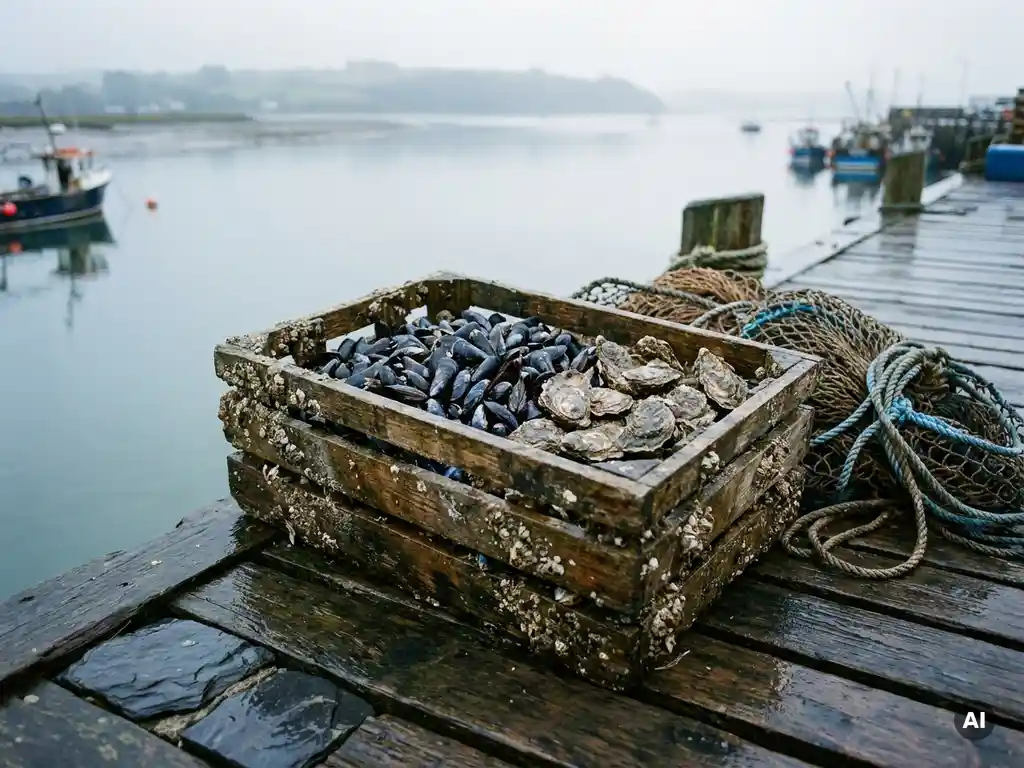
Shellfish are generally a sustainable choice, whether farmed or wild-caught, but the degree of sustainability varies significantly by species, origin, and fishing method. Farmed mussels and certified oyster farms are considered particularly environmentally friendly, while wild shellfish can be sustainable provided they come from well-managed stocks. As a buyer or hospitality professional, it pays to look beyond the category alone and pay attention to origin, certification, and farming method.
What is the difference between farmed and wild shellfish?
Farmed shellfish are raised in controlled conditions, such as aquaculture farms, suspended cultures, or table systems at sea. Wild shellfish are caught in their natural habitat, without human cultivation. The biggest practical difference lies in the manageability of quality, availability, and environmental impact.
In aquaculture, shellfish such as mussels and oysters are raised in specially designed areas. Bottom-culture mussels grow on the seabed and are harvested using trawls or specialized equipment. Suspended-culture mussels grow suspended in the water on ropes or socks and are harvested once they have reached the desired size. Oysters are often cultivated in hanging baskets, bags on tables, or via seabed culture, depending on the desired quality and type of oyster.
In wild fishing , shellfish such as cockles or certain mussels are harvested directly from the wild. The population size, season, and fishing method largely determine how sustainable that catch is. Because wild stocks are more sensitive to overfishing and climate change, active management of these stocks is essential.
Are farmed shellfish better for the environment?
In most cases, farmed shellfish are particularly environmentally friendly, sometimes even actively beneficial to the ecosystem. Mussels and oysters filter large quantities of water, thereby improving water quality. They require no artificial feed, no antibiotics, and have a low carbon footprint compared to other animal protein sources.
Oyster farms and mussel farmers work closely with the ecosystem. Oysters and mussels obtain their food directly from the surrounding seawater via filter feeding. This makes their cultivation virtually self-sufficient and virtually without external inputs. Moreover, shellfish store carbon in their shells, which has a positive side effect on the carbon balance.
However, not all cultivation is automatically sustainable. The choice of location, the density of the cultivation plots, and the harvesting method all play a role. Intensive bottom cultivation can disturb the seabed if it is not carefully managed. Suspended cultivation generally has a smaller impact on the seabed. It is therefore sensible to inquire about the specific cultivation method when purchasing, not just the fact that a product has been cultivated.
Can wild shellfish also be sustainable?
Yes, wild shellfish can certainly be sustainable, provided that fishing takes place within the carrying capacity of the stock and is controlled by sound policy. The sustainability of wild catches depends on the population size, the fishing method used, and management by national or international authorities.
In Europe, quotas and seasonal closures have been established for various wild shellfish populations to prevent overfishing. Cockles are a well-known example: the Dutch cockle fishery is assessed annually based on the size of the stocks and the availability of food for birds and other animals that depend on cockles. A fishing permit is issued only when the stocks are large enough.
Wild shellfish from well-managed areas can therefore be fairly certified, for example via the MSC label. The key lies in transparency: from which stock does the product come, how is that stock monitored, and which harvesting method was used? As a buyer, it is wise to ask your supplier these questions.
Which labels apply to sustainable shellfish?
The most recognized labels for sustainable shellfish are the MSC label for wild-caught products and the ASC label for farmed products. Both are awarded after independent certification and provide buyers with assurance regarding the origin and management of the product.
MSC (Marine Stewardship Council)
The MSC label is internationally recognized and is awarded to fisheries that demonstrably operate sustainably. For shellfish, this means that wild stocks are not overfished, that bycatch is limited, and that the ecosystem is disturbed as little as possible. Products with the blue MSC label are traceable throughout the entire chain.
ASC (Aquaculture Stewardship Council)
The ASC label focuses on responsible aquaculture, i.e., farmed products. For mussels and oysters, this means, among other things, that farming does not cause significant damage to the surrounding ecosystem, that working conditions are in order, and that the origin is fully traceable. ASC-certified farms are regularly inspected by independent auditors.
In addition to these international quality marks, there are also regional quality and origin labels, such as the Zeker Zeeuwsquality mark for Zeeland products. That quality mark guarantees regional origin and is a recognizable signal for the quality of Zeeland mussels and other products from the region.
How do you recognize the origin of shellfish as a buyer?
As a professional buyer, you recognize the origin of shellfish based on traceability documentation, quality marks on the packaging, and the information your supplier can provide. Good suppliers can indicate exactly from which farming plot or fishing area a product originates and the route it has taken.
Concrete points of reference for assessing origin are:
- Batch documentation: Each lot of shellfish must be accompanied by a registration document containing information on the area of origin, harvest date, and processor.
- Labeling: MSC or ASC certification on the packaging confirms that the origin has been independently verified.
- Country and region of origin: The production area must be stated on the packaging or label, such as “Oosterschelde” or “Brittany”.
- Supplier transparency: A reliable supplier can tell you from which grower or auction a product was purchased and how it was processed.
Traceability is becoming increasingly important in professional purchasing, not only due to legislation but also because guests in restaurants and hotels are increasingly asking about the origin of what they eat. A supplier who can tell the story behind the product helps you as a chef or buyer to pass that story on to the end consumer.
How Adri & Zoon helps with sustainable shellfish
For professional kitchens and buyers who want to make informed choices regarding shellfish, Adri & Zoon a reliable and transparent range. As a wholesaler of fish, crustaceans, and shellfish, the company collaborates with high-quality growers and fishermen and places great value on traceability. In concrete terms, this means:
- A wide assortment of shellfish, including mussels from Neeltje Jans mussel farm with the Zeker Zeeuws quality mark and certified oysters.
- Insight into the origin and journey of products, so that you as a buyer or chef can tell the story behind the product.
- Specialized product knowledge, particularly regarding oysters, to properly inform you and your team.
- Custom packaging and processing, tailored to the requirements of your kitchen or concept.
- Deliveries six days a week with our own transport, for consistent quality and reliable supply.
Would you like to know more about our selection or discuss which shellfish best suit your concept? Contact Adri Adri & Zoon for personal advice.