

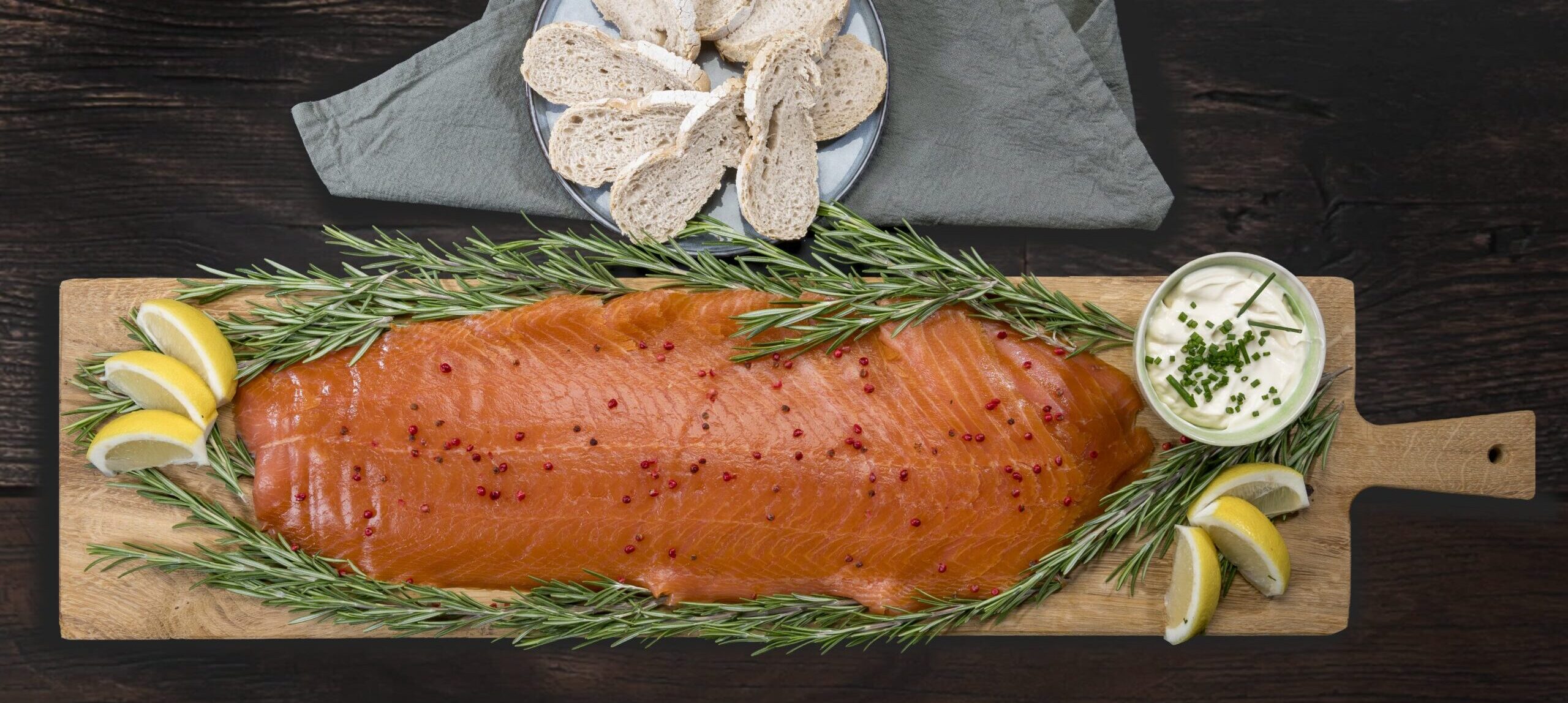
Smoked salmon is served professionally by working with thin, even slices cut with a long, flexible knife, complemented by classic garnishes such as capers, red onion, and crème fraîche. In a restaurant setting, consistency in portioning, a polished presentation on the plate, and strict adherence to hygiene rules are key. This article covers all essential aspects, from cutting techniques and portion size to garnishes, plate presentation, and quality selection.
Which cutting techniques are considered standard in the professional kitchen?
In the professional kitchen, smoked salmon is sliced with a long, thin, and flexible filleting knife or a special salmon knife. The cut runs diagonally, almost horizontally across the fillet, creating wide, thin slices. This technique guarantees a uniform thickness, a beautiful texture, and an optimal taste experience with every bite.
The knife moves in one fluid motion from front to back, without sawing. This keeps the structure of the fish flesh intact and prevents the slice from tearing. For a sleek presentation, it is important that the knife is sharp and that the salmon is kept slightly chilled before slicing. A fillet that is too warm becomes soft and more difficult to slice.
When slicing a whole side of smoked salmon, you typically start at the tail and work towards the head. The skin remains in place during slicing and serves as a stable base. If you wish to remove the skin, do so after slicing the fillet, or slide the knife close to the skin during the cut.
In kitchens where large volumes are processed, machine cutting is sometimes used. However, manual cutting offers more control over thickness and presentation, which is preferred in the higher segment.
How do you calculate the correct portion size for smoked salmon?
In a professional kitchen, you typically calculate 60 to 80 grams of smoked salmon per person. As part of a brunch buffet or cocktail party, the portion is lower, around 30 to 50 grams. For a main course or an elaborate salmon dish, allow 100 to 120 grams.
The portion size depends on the context: an amuse-bouche calls for a small, flavorful quantity, while a full starter on the plate requires more volume. Also consider the composition of the dish: if the salmon is paired with bread, blinis, or a rich sauce, a smaller portion will suffice.
For budget calculation and purchasing, it is useful to know that a side of smoked salmon weighs an average of 1 to 1.5 kilograms after processing. With a portion size of 70 grams, this yields roughly 14 to 20 portions. When planning, take cutting loss into account, which may be slightly higher with manual slicing than with machine-cut slices.
Which garnishes and side dishes pair with smoked salmon?
The classic garnishes for smoked salmon are capers, finely chopped red onion, lemon wedges, and crème fraîche or sour cream. This combination is timeless in the restaurant world because the tart and fresh flavors balance the fattiness of the salmon. Fresh dill is a staple herb that adds both flavor and color.
In addition to these classics, there are modern variations that work well in a contemporary restaurant environment:
- Blinis or toasts as a base for an elegant appetizer or snack
- Avocado cream or guacamole as a creamy counterpart
- Cucumber, radish, or fennel for a fresh, crunchy texture
- Caviar or roe as a luxurious topping for a festive presentation
- Wasabi mayonnaise or a yuzu dressing for an Asian twist
- Soft cream cheese or mascarpone as a spreadable base on bread or crackers
When choosing side dishes, a rule of thumb is that freshness and acidity are always welcome. A light watercress salad, a lemon vinaigrette, or pickled vegetables provide contrast and keep the dish light. Heavy or starchy side dishes can overpower the delicate flavor of the salmon.
How do you present smoked salmon attractively on the plate?
An attractive presentation of smoked salmon begins with folding or rolling the slices into an elegant shape. Thin slices are rolled loosely or placed in a soft fold so that they gain volume and movement on the plate. Laying them out flat also works, but requires a tight arrangement and carefully placed garnish.
Use a white or neutral plate as a background so that the orange-pink color of the salmon stands out. Work with odd numbers of slices, as this looks visually calmer than a symmetrical arrangement. Do not place garnishes randomly, but with attention to color and height: a sprig of dill in the right spot draws the eye to the center of the plate.
Sauces and creams are preferably applied alongside or underneath the salmon, not over it. A quenelle of crème fraîche or a drizzle of lemon oil gives the dish a professional finish. Avoid overcrowded plates: space on the plate is part of a polished restaurant presentation and lets the quality of the product speak for itself.
For buffets or cold platters, arrange the slices overlapping on a platter, optionally garnished with lemon, dill, and capers along the edges. This looks festive and makes it easy for guests to serve themselves.
What are the correct storage and hygiene rules for smoked salmon?
Smoked salmon must be stored at a temperature between 0 and 4 degrees Celsius. Vacuum-packed salmon remains edible for several weeks under these conditions, depending on the best-before date on the packaging. Once opened or cut, the salmon must be consumed within two to three days and stored covered in the refrigerator.
In a professional kitchen, additional hygiene rules apply:
- Use a separate cutting board and knife for fish to prevent cross-contamination with other products
- Store sliced salmon covered with plastic wrap or in a closed container
- Never place salmon near products with strong odors, as fish quickly absorbs flavors
- Always work with clean hands and wear gloves when cutting and portioning
- Bring the salmon to room temperature only just before serving, for a maximum of 15 to 30 minutes
Thaw frozen smoked salmon slowly in the refrigerator, never on the counter or in warm water. This preserves the texture and prevents bacterial growth. Once thawed, the salmon must not be refrozen.
Which quality differences determine the choice of a specific smoked salmon?
The quality of smoked salmon is determined by three factors: the origin and breed of the salmon, the smoking method, and the freshness of the raw material. Atlantic salmon, also known as Norwegian salmon, is the most common and has a mild, creamy fat profile. Scottish salmon is known for a slightly more pronounced flavor and a higher fat content. Wild salmon, such as sockeye, has a more intense color and a firmer, less fatty texture.
Smoking methods
Cold-smoked salmon is smoked at temperatures below 30 degrees Celsius. The flesh remains raw in texture, soft and melt-in-your-mouth. This is the most commonly used variety in the hospitality industry for appetizers and cocktail presentations. Hot-smoked salmon is prepared at higher temperatures and has a cooked, flakier texture, similar to poached fish. Hot-smoked salmon is better suited for salads, pasta, or hot dishes.
What to look out for when purchasing
When purchasing smoked salmon for a professional kitchen, pay attention to the color (bright orange-pink, without gray spots), the aroma (mild and aromatic, not overpowering or acidic), and the texture (firm but supple, not dry or slimy). A high fat content is usually a sign of quality: the flesh has a slight sheen and a beautiful marbled structure of white fat veins. Always ask the supplier about the origin and the smoking process, as transparency regarding the production method is a reliable quality indicator.
How Adri & Zoon helps with the professional serving of smoked salmon
As a wholesaler of fish, crustaceans, and shellfish, Adri & Zoon smoked salmon to professional kitchens that want to put the best on the table. The company actively considers what a kitchen needs and offers concrete solutions:
- Cut and portioned to size: salmon can be supplied in the desired portion size, so the kitchen can get to work immediately without extra processing time.
- Wide range of smoked fish: in addition to salmon, also smoked eel and other products from the delicatessen segment
- Vacuum packaging and other packaging options: products are packaged according to customer requirements, which benefits shelf life and hygiene.
- Traceability: Adri & Zoon can provide insight into the origin of products, which helps chefs inform their guests about what is on the plate.
- Own transport: delivery via our own truck fleet, ensuring the cold chain remains secure.
Would you like to know which options are available for your kitchen? Contact Adri Adri & Zoon for a personal consultation.