

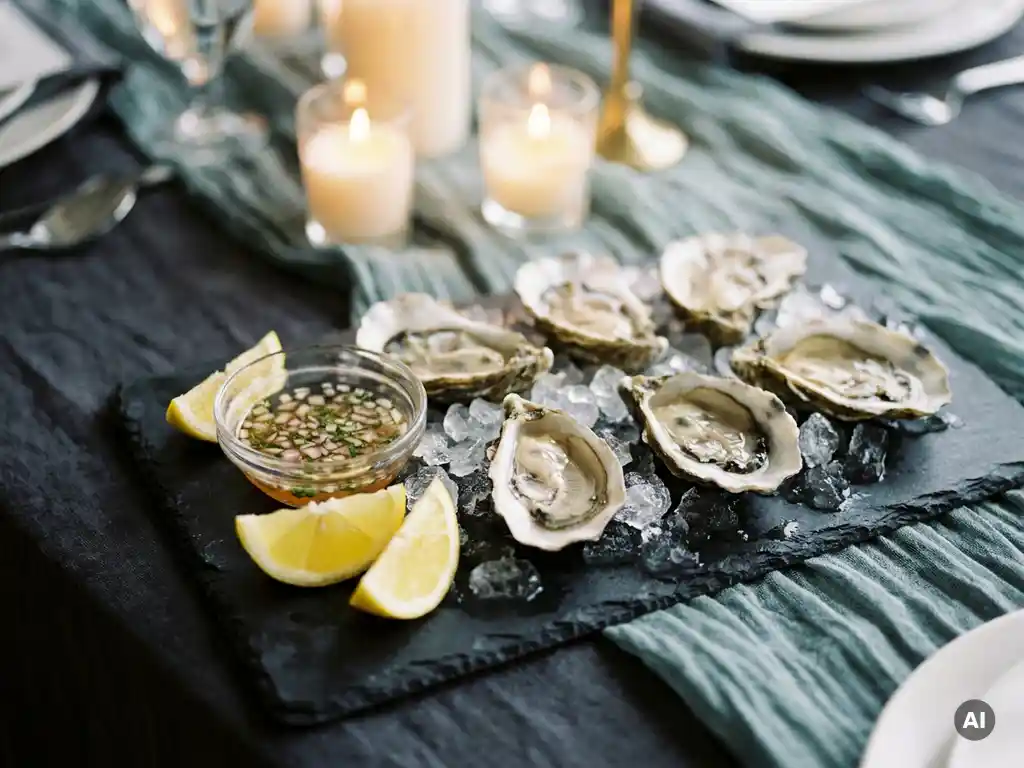
You serve oysters festively by presenting them chilled on a bed of crushed ice, complemented by classic garnishes and a beautifully plated dish. This combination of temperature, texture, and visual appeal makes oysters immediately suitable as a luxurious appetizer or snack. In this article, you will find a concrete answer to every question, from presentation and opening to storage and drink pairings.
What presentation makes oysters look festive on the table?
Present oysters festively by placing them on a generous bed of crushed ice, with the rounded side down so that the liquid remains in the shell. A large, flat platter or a wooden board with a rim works well as a base. Add lemon wedges, sea salt, and small bowls of garnishes for a polished, luxurious look.
The visual impact of an oyster presentation lies in the details. Crushed ice keeps the oysters cold while simultaneously creating an attractive contrast with the grey-green shells. If you are working with larger numbers, you can build the platter in layers: an outer rim of larger shells and an inner layer of smaller sizes. This adds depth and makes the presentation richer.
During the holidays, it is customary to add a little something extra to the presentation. Consider small leaves of seaweed or samphire as a decorative element, or a bowl that matches the table setting in color or material. Silver, slate, and white porcelain are popular choices for a festive table. However, keep the presentation simple: oysters are a luxury product in themselves and do not require an abundance of decoration.
How do you open oysters without damaging them?
You open oysters with an oyster knife and a firm grip. Hold the oyster with a damp cloth or oyster glove, convex side down. Insert the knife into the hinge at the back of the shell, gently twist the knife, and pry open the lock. Then slide the knife along the top of the shell to cut through the adductor muscle.
A common mistake is pushing too hard or inserting the knife too far, causing the shell to break and pieces of shell material to end up in the oyster meat. Work calmly and with control. As soon as the hinge creaks and releases, you have found the correct position.
After opening, it is important to completely remove the top of the shell and cut through the lower muscle that connects the meat to the shell. This makes eating easier for the guest. After opening, always check that there are no shell fragments in the liquid. Do not discard the oyster liquid: it is an integral part of the flavor and is also known as the seawater of the oyster.
For professional kitchens that serve large numbers of oysters, it is wise to have staff practice beforehand. A practiced hand opens an oyster in a few seconds without damage. Always use a solid oyster knife with a short, sturdy blade and a protected handle.
Which garnishes go well with oysters served festively?
Classic garnishes for festively served oysters are fresh lemon juice, a mignonette of red wine vinegar with finely chopped shallot, and a light Tabasco sauce. These combinations enhance the briny, fresh taste of the oyster without overpowering it. For a festive presentation, add the garnishes in small bowls alongside the platter.
In addition to the classics, there are garnishes that give the presentation a contemporary or luxurious twist:
- Champagne or prosecco granita: a frozen, granular ice that is spooned directly onto the oyster. Elegant and surprising at the same time.
- Ponzu or yuzu: Japanese citrus-based sauces that add a fresh, slightly sweet note.
- Caviar: a small spoonful of caviar on an opened oyster is a classic luxury combination that pairs perfectly with a festive menu.
- Finely chopped chives or samphire: for a subtle spiciness and color contrast on the plate.
- Wasabi or pickled ginger: for guests who enjoy a spicy, Asian touch.
If you wish to serve the oysters warm, garnishes such as a beurre blanc, a light gratin with Parmesan, or a drizzle of truffle oil are also options. Warm oysters are less traditional but can offer an interesting variation in a multi-course menu.
When choosing garnishes, take the type of oyster into account. A full, meaty Spéciale such as a Gillardeau tolerates slightly stronger flavors. A slimmer Fine de Claire is more delicate in taste and calls for lighter additions.
Which drinks pair best with oysters?
Dry champagne or a crisp Muscadet are the most classic pairings with oysters. The high acidity and minerality of these wines complement the briny, iodine-rich flavor of the oyster. For a festive dinner, champagne is the most recognizable and appreciated choice.
Besides champagne, there are several other drinks that pair well with oysters:
- Chablis: an unoaked Burgundian Chardonnay with a crisp minerality that underscores the briny notes of the oyster.
- Muscadet Sèvre et Maine: light, dry, and fresh, with a subtle yeast note from aging on the lees.
- Dry Riesling: particularly from Alsace or Germany. The fruity acidity works well with meaty Spéciales.
- Stout beer: an Irish stout, such as Guinness, is a surprising yet classic combination that works well with raw oysters.
- Sake: a dry junmai sake has an umami richness that complements the taste of the oyster without overpowering it.
Avoid sweet wines, oak-aged Chardonnays, or powerful red wines. These overpower the subtle flavor of the oyster and disrupt the balance on the plate. Alcohol-free alternatives such as a low-sugar kombucha or cold-brewed green tea can also work if there are non-drinking guests at the table.
How many oysters per person do you count for a festive menu?
For a festive starter, you generally count on six oysters per person. If oysters are served as part of a broader seafood platter, three to four per person suffice. If the oyster is the only starter in a multi-course menu, six is a common portion for most guests.
For drinks or a reception where oysters are served as an appetizer alongside other dishes, you can count on two to three oysters per person. Keep the total selection in mind: the more other appetizers there are, the fewer oysters per person are needed.
If you wish to serve oysters as the main element of a luxury oyster menu, the number can increase to twelve per person, possibly distributed across multiple types or origins. This gives guests the chance to experience the differences in taste and texture between, for example, a Fine de Claire and a Spéciale, making the menu both educational and culinarily interesting.
When in doubt, always order slightly more than you think you need. Oysters that are not served can be kept until the next day, provided they are stored correctly.
How do you store oysters correctly until serving time?
Store oysters in the refrigerator until just before serving, at a temperature between two and eight degrees Celsius. Place them with the rounded side down so that the moisture remains in the shell. Cover them with a damp cloth or newspaper, but never use plastic wrap or airtight packaging: oysters are living animals that need air.
Fresh oysters in closed shells can be kept for several days after delivery if stored correctly. Always check before use whether the shells are closed or close upon touch. An oyster that remains open and does not respond is no longer suitable for consumption.
Never store oysters in fresh water or on ice that melts and releases water. The fresh meltwater kills the oyster quickly. Use crushed ice exclusively for table presentation, not for storage in the refrigerator. Also ensure that the oysters are not placed near strongly scented products, as they can absorb odors.
If the oysters have already been opened, they must be served as soon as possible. Opened oysters should be kept for a maximum of one hour, covered and refrigerated. In a professional kitchen, it is customary to open oysters only just before serving, so that they are presented to the guest as fresh as possible.
Serving oysters festively with support from Adri & Zoon
If you want to serve oysters for a festive occasion, everything starts with the quality of the product itself. Adri & Zoon is a professional fish wholesaler specializing in fish, crustaceans, and shellfish, with extensive knowledge of oysters and a wide range that meets the needs of hospitality professionals. As an official Gillardeau dealer in the Benelux, Adri & Zoon also supplies one of the most highly regarded oyster brands in the world.
What sets Adri & Zoon apart for professional kitchens:
- Wide assortment of oysters, including Spéciales and Fines from France, Ireland, and Zeeland
- Official Gillardeau dealer in the Benelux, for high-end restaurants
- Own transport for reliable delivery, six days a week
- Specialized product knowledge regarding oysters, origin, and quality differences
- Possibility of custom packaging, including festive packaging in December
- Strong traceability: the company can trace the origin and route of every product
Would you like to know which oysters best suit your menu or festive concept? Contact Adri Adri & Zoon for personal advice and a tailored offer. You can also read more about the story behind the company to understand where the passion for quality comes from.