

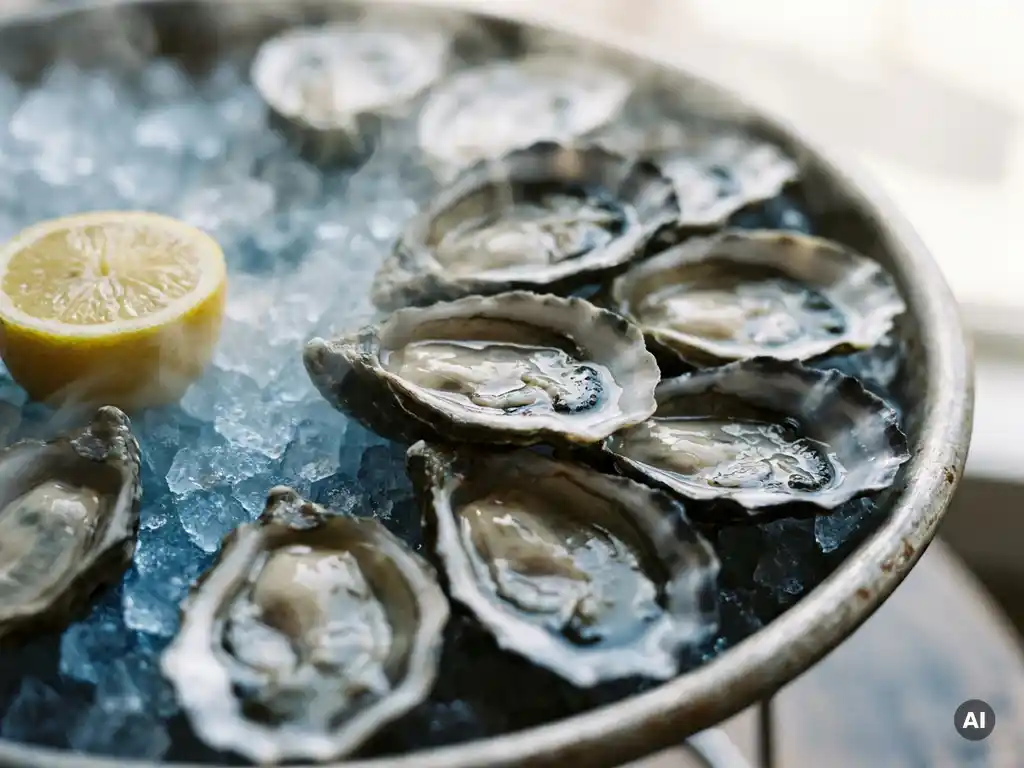
Oysters are best served in months with an “r” in their name: from September through April. During this period, the waters are cooler, which benefits the taste, texture, and safety of the oysters. The questions below provide a complete picture of everything you need to know about the oyster season, the influence of water temperature, and how to recognize an oyster at its best.
Which months are the best oyster season?
The best oyster season runs from September through April. These are the months with an “r” in their name, and this rule of thumb did not come about without reason. In the colder months, oysters are fatter, plumper, and more flavorful. They have not expended energy on reproduction and are therefore at their very best in terms of quality.
In practice, this applies most strongly to farmed oysters. The peak months are November through February, when water temperatures are at their lowest and oysters have fed to their maximum. It is precisely during this period that they are at their creamiest in taste and firmest in texture. For professional buyers looking to put oysters on the menu, this is the ideal time to serve the best quality and offer guests an unforgettable experience.
Why do oysters taste different in the summer?
Oysters taste different in the summer because they are in the reproductive phase. As soon as the water temperature rises above approximately 16 degrees Celsius, oysters begin to spawn. During and after spawning, the meat is watery, soft, and less pronounced in flavor. The characteristic salty, creamy taste that makes oysters so special is barely present at that time.
Moreover, oysters can be milky in color in the summer, which is less appealing to many consumers. This is not a sign of spoilage, but a direct result of reproduction. For restaurants and seafood shops that want to offer a consistently top-quality product, summer is therefore the least favorable time to serve oysters.
Are there oysters that are good all year round?
Yes, there are oyster species that are of good quality all year round. The Japanese oyster, also known as Crassostrea gigas, is the most cultivated species in Europe and is currently available in triploid form. Triploid oysters have been genetically modified not to reproduce, allowing them to maintain their quality even in the summer.
These so-called “summer oysters” are firm, full of flavor, and reliable in quality all year round. This makes them an excellent choice for hospitality businesses that want to keep oysters on the menu year-round without compromising on quality. In addition to triploid oysters, farmed oysters from colder waters, such as those from Ireland, are also often available for longer in the season and of consistent quality.
How does water temperature affect the taste of oysters?
Water temperature is the most important factor determining the taste of oysters. In cold water, oysters grow more slowly but build up more glycogen. That glycogen gives oysters their characteristic sweet, creamy taste and ensures a firm, full texture. The colder the water, the more intense and complex the oyster's flavor typically is.
If the water temperature rises, oysters consume their glycogen reserves for reproduction. The result is a less pronounced flavor and a softer texture. In addition to temperature, water composition also plays a role: salinity, the amount of plankton, and water currents all contribute to how an oyster tastes. Oysters from the waters of Zeeland, for example, have a typically briny taste due to the specific microclimate of the Oosterschelde, while oysters from Brittany or Ireland have a different flavor balance.
At what time of day is it best to serve oysters?
Oysters are best served as fresh as possible, regardless of the time of day. However, there are practical considerations that play a role. In the hospitality industry, oysters are typically served in the evening, as part of an elaborate menu or as an aperitif. This is not only a matter of tradition but also of logistics: fresh deliveries often arrive in the morning, meaning oysters are at their freshest in the evening.
If you serve oysters as an aperitif or amuse-bouche, choose a moment when the guest is still fresh and their taste buds are not yet overstimulated by other flavors. Oysters have a subtle flavor and deserve a prominent place at the beginning of a meal. Always keep oysters well chilled and open them only at the very last moment, so that they arrive at the table as fresh as possible.
How do you recognize an oyster at its best?
An oyster at its best is alive, tightly closed, and heavy for its size. The weight indicates a high moisture content and full, well-nourished flesh. An oyster that feels too light or is open is no longer fresh and should not be served.
When you open a fresh oyster, these are the characteristics of top quality:
- Scent: fresh and sea-like, never sharp or ammonia-like
- Color: bright and shiny flesh, not milky or gray
- Texture: firm and full, not limp or watery
- Response: the flesh contracts slightly when you put a drop of lemon juice on it, a sign that the oyster is still alive.
- Moisture: the shell contains clear, salty liquid, the so-called “eau de mer”
An oyster that meets all these characteristics is ready to be served. If you have any doubts about the quality, do not serve the oyster. Fresh oysters do not tolerate compromise.
How Adri & Zoon helps with oysters, mussels, and shellfish
For professional buyers who always want to serve the best quality oysters, a reliable supplier with in-depth product knowledge is indispensable. Adri & Zoon is a family business from Yerseke with years of specialized knowledge regarding oysters, crustaceans, and shellfish. Drawing on this expertise, they actively collaborate with clients to determine which varieties, origins, and qualities best suit their concept and season.
What sets Adri & Zoon apart for professional clients:
- Wide assortment: from Zeeland oysters and Gillardeau to mussels, shrimp, and other shellfish, as a one-stop shop for the professional buyer.
- Year-round availability: even outside the classic season, they can deliver the best quality through their network of international outlets and their own branches.
- Strong traceability: the origin and route of every product can be easily traced, so that you as an entrepreneur can tell the story behind the oyster to your guests.
- Official Gillardeau dealer in the Benelux: for restaurants that want to offer the most exclusive oysters
- Own transport: full control over the delivery, so that oysters arrive as fresh as possible
- Thinking along with the customer: not only supplying, but also providing advice on varieties, quality, and presentation.
Do you want to know which oysters are at their best right now, or are you curious about what Adri & Zoon can do for your company? Get in touch and discover how they can support you as a professional buyer.